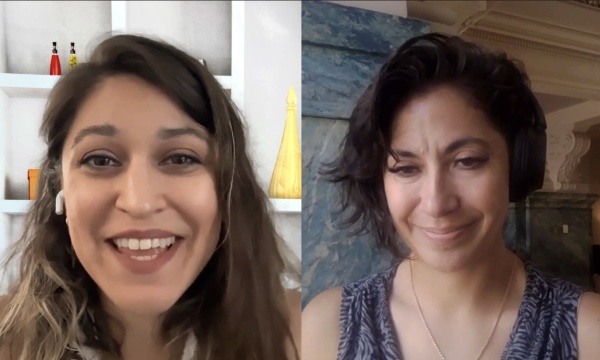
Welcome back to the government video podcast. I'm Michelle Ali Mirati, and I'll be your host today. I'm here with our guest, Mike Wassenaar, today who is the president and CEO of the Alliance for Community Media. And we've been doing some work here in Minneapolis and decided it was good to sit down and have a conversation, talk about some issues that we work together on in other sectors, full disclosure. And that is the topic of local franchise authority, how that affects differing departments at the municipal, county, state, and national level. Really, it kind of affects folks all along the chain. But first, let's talk a little bit about you, Mike, and your background. I'm happy to be here. Thank you for being a part of the conversation or inviting me into the conversation. I've worked in nonprofit media for most all of my media career in radio, both in public and community radio settings as a journalist, and then also as a program administrator and a program director. And then worked in television operating cable channels in Saint Paul for about thirteen years. And that's where our paths first crossed. We first met. We did both work at the same radio station, just not at the same time. That's right. Actually, part of the thing that's interesting about the Twin Cities is that there's a whole host of nonprofit media as well as governmental media that intersect. You've got different types of relationships that are mutual amongst the different types of providers. I think even though the media environment can be competitive, one of the things that I think that has marked the twin cities generally has been a sense of mutuality amongst professionals. So that nonprofit media, public radio, community radio, they get along. Television stations get along. And actually, see this in other commercial markets where, you know, you've got feeds that are basically supporting one another regardless of who your competitors are. And that I think that's one of things that's been kind of nice about learning media in the Twin Cities market. Yeah. And I think that that culture that you're talking about really contributes to the wealth of local information and just local civic information organizations that exist. That's right. And I think it it also has led to a tradition, particularly in the nine county area of Minneapolis Saint Paul, of local governments that are investing in resources to create video. Yeah. Also, now they're doing other types of media work. They're doing podcasting. They're doing, in some cases, actually, we're seeing local government getting radio stations to To call PFM licenses, yep. To be able to do emergency communication work, and then also to help local businesses and support local culture. Those are the life of a suburb, right? Yeah. Because very often we find that if you live in a suburban environment or a small urban environment because of the way media markets work, your story isn't told. The agenda of the local government doesn't show up in the newspaper. Very important decisions in the life of your community. Basically, don't rise to the occasion for the large market newspaper, large market television, large market radio station. So in lots of respects, you see here this in twin cities, but you see this in other communities across the country, either the nonprofit video or government video entities end up serving as an anchor Yep. For basic information that you need about how things work, how to get a business license, how to connect, you know, what's going on in main streets, that's that. Public services that are available, events. Well, we often don't think about that as a role that local government can play, but particularly in towns that have a main street or have a small business sector that is very localized, local government ends up being an anchor. Right? And then the media services that are provided help to supplement and support the life of the community, Even, like, telling you what's happening with the local school district, how you you know, information that affects your your your child's life in school. Information about voting Right. Information about health care services that are available, language translation services. There's there's so much bolstering of service delivery that can happen through video and through just expanding access through, like, apps. We talk about that on this podcast a lot. Yeah. In other episodes, and I also love that you brought up, you know, the fact that we've got a lot of organizations now that are doing video and podcasting or LPFM Right. Because we're seeing a lot of workflows. I I hope to cover that in a future episode. We've got a lot of great examples. Well, I think it's also a realization that while people do still sit their butt on a couch in front of a TV, media consumption is complex. And you'll listen to media in the car. You'll listen to media while you're watching traditional television, you'll have it on when you're cooking, in your kitchen, you'll wear it on your wrist, you'll have it when you're walking your dog, it has filled in the cracks in people's lives. And I think savvy operations understand that, and they realize that they have to be multi platform. They realize they have to be creating things that people need to use. And while, you know, I think there's sort of a bread and butter aspect to meeting coverage for local governments around the country in both local franchising states and non local franchising states. So I think every state of the country depends upon some type of meeting coverage like on YouTube, if not on a cable channel. It's not just sort of like the meeting coverage. It's other information that people need to know so that they can interface with their government more. They can take advantage of services more fully, and the community can be more successful. I mean, think it's the other way to think about a lot of the sort of information work that you see in the sector. I think that is a really important thing to point out because it's a concept that a lot of people understand in every other sector. Right? Getting the most out of our investment, right? But I think you really do see some places that maybe they see these facilities and this coverage as purely for putting meetings out and checking that off the box of things that they have to And necessary from a transparency standpoint. Not, yeah, not that it's not important, but just not recognizing the other areas in which you can enrich your residents' lives through just expanded coverage and also through expanding the platforms by which you reach residents and I mean, way to think about it, you need your vitamins, but you can all have Yeah. Other types of food. You know other stuff too. You can have treats. I wanna unpack some of these different layers that we've talked about so far, like municipal level, county level, state level, and even some things that are regulated at the national level because there's some pending legislation coming up that could affect people across the country and what they are able to do and have autonomy over at the local level. So whether or not you are an entity that is doing a lot locally or you're thinking about launching a lot of video initiatives or launching a streaming app or launching a podcast, getting an LPFM license, you wanna kinda gather, okay, who are the stakeholders? Who are the people I need to talk to in order to make this happen? What are other cities doing? So I wanna just, like, do a little overview of some of the things you've seen because you go all over the country. You talk to all different types of stations doing maybe one thing or many things in their community. And then let's talk about this pending legislation and how that might make those things look different Sure. In the future. Okay. The thing you have to realize about the way municipal and nonprofit video have worked historically in the United States is we've set up a this federal system. It was set up specifically to ensure that you had resources being devoted for local communities. You know, federal law in eighty four sets out that local government, whether it be at the local county or state level, has a right to be able to basically get resources to meet information needs for their residents as a part of what was then relatively new technology, cable, relatively new codification of how you used public rights of way to get to people's homes and businesses and through cable franchising. And they were given a lot of leeway within that to structure that process locally. Right. Although, basically, local government was the enforcer to ensure that everybody got service. One of the interesting things about the impact that that had is that now the cable ISPs, broadband providers, have ubiquity of service in certain footprints because they were forced to build out to every home within a jurisdiction. It was local government that ensured that that happened. That was a right that basically states and localities had, and they still have actually under federal law. So the thing that is a little maddening for folks is that there's not one solution for For every city. For every city. Yeah. Because Cleveland doesn't look exactly like Laguna Beach. And the needs in Honolulu are different from the needs in Portland, Maine. That's one premise we have to kind of accept, and then the types of services that have grown up in each of those communities looks radically different. So, like, you see in some parts of the United States, what I would sort of describe as sort of village television Where you have a village or local town employee who manages operations, and they work with a lot of volunteers. And they're covering, like, the life of the community. They're doing a lot of high school coverage. Yeah. A lot of high school coverage. Well, why is that? It's because the high school is the lifeblood of a small town In lots of America. Right? Yep. Now that's going to be very different than you see in large urban settings, where you had very different sort of concentration of resources, and you see A variety of issues and And a variety of issues and needs, but then also a variety of types of educational institutions that had certain information needs, nonprofit sector needs, cultural needs, and then also local government needs. So you're talking about conversations among several different agencies. Right. So you'll often see in certain parts of the country either large government sector operations that are doing primarily government work or multi jurisdictions. They they cover, like, county, state, and local government work. In some parts of the country, depending upon how they thought up the solution for this, you actually have a nonprofit that acts as a third party contractor for that local government. We see this in Oregon a lot. We'll see this in And, like, a nonprofit media department Correct. Comes in and can be more nimble and Right. Right. In what they can Right. And the services they can provide. And, you know, and and it's so it's very interesting. All around the country, you've got, like, slightly different sort of flavors of this. Either you've got nonprofit organizations that are doing, what has historically been described as public access television for communication. Sometimes they had a wing that did local government or educational television for school districts or colleges. Those e channels. The e channels. The classic e channel, g channel. So it's a little dizzying if you start to try to sort of stack all of the cases together. There are currently about eighteen hundred organizations of different types across the United States that just operate a PEG channel, a public educational or government cable channel. And that's separate from all of the other video work that happens across the United States. Yeah, which can look very different from place to place. Right. So in the state of California, for example, there are three hundred cities that have a video feed on YouTube. That's a lot. Right? So I mean, so that's very different from I mean, we know that through some of the work our colleague John Hauser has done with the Internet Archive, where basically John's doing great work. He's been examining what local governments are doing on YouTube particularly, and he's come up with some astonishing numbers in terms of the amount of local media that's being created by local governments across the country, regardless of whether or not they have a state cable franchise or a local cable franchise. Or even a formal facility. Even a formal facility. That's sort of the success story that we need to underline is that over the course of the last fifty years, you've had this incredible investment in civic infrastructure to do communications work to meet people's needs. Because it could be organized at the local level. Correct. Yes. Correct. And because you could have an agreement with a company to be able to have them use public rights of way to be able to get to every home and business in your community, and then resources come back in the form of either a franchise fee or a separate peg television fee to be able to create content that you wouldn't otherwise be able to do so. That's part of the the genesis for people's careers actually in doing work in government video. And within that, when we say creating content, that's really all encompassing. That's equipment and facilities, staff, that's Yeah. Anything that you need to actually get that content made and that looks very different from city to city can look like maybe you have, an actual studio set up or a control set up at city hall Yeah. Or some people are feeding it back to a separate facility. But but all of these things are, again, based on that city's unique needs, their department structures, their budgets. Right. I mean, so for example, in a community that has a lot of high schools, you will often see an emphasis on remote recording capability to be able to do sports coverage. And that's meant that, basically, there's been certain types of investment. Sometimes it was actually physical fiber connections going between buildings. Increasingly, there's been investment in bonded cellular solutions for backhaul, which I think are way more economical and free up the ability to be able to cover what's happening in the community rather than like you dig a hole in the ground and you imagine that in the next thirty years something will be happening there. Yeah. Right? If you've got the ability to be mobile, you can go to a new facility. You can go to a community event. You can cover something that's not in just in city hall or not just in the local high school. Yeah. Right? And there's so many there's so many great live streaming tools that are accessible to cities now. So so that I think has been a Yeah. Revolution in the last decade. That's been very positive at a time when it's I think it's relatively harder to get support out of a company to be able to provide that fiber. That's actually been an area of contention between local governments and cable companies, is how that investment in technology works, and where the money goes, and how much is needed to be able to meet those needs in the next decade ahead. And part of the problem has been business changes and technology changes, and it's become harder and harder to predict what the next ten years looks like, let alone the next five years, let alone the next three years. So that's some of the conditions that we find ourselves in. So let's talk about we've said over and over that this situation really varies drastically from place to place. But if we were gonna try to nail down some of the more common situations, like, who's at the top making decisions in this local structure that still exists in a lot of places? So in half of the states in America, there will be someone who functionally is a local cable or broadband administrator. They will often be either in a technology department. They also might be in a legal department
officer for a county or city, and then you've got sort of like cities and townships and counties that don't necessarily have the technical expertise. They'll often subcontract out advice from a legal expert. Right? So you often see that happening across the United States. And these people are people whose sole job it is to administer the cable agreement? Or are they just wearing that But then also they'll be doing other types of technical planning. They'll be working with police and fire very often in terms of technical planning to be able to support emergency communications. So it really depends upon sometimes it's going to be in, like, communications department Often within, like, administrative leads, like an executive's office or a mayor's office. But then in larger cities or larger entities like counties, you'll see it often in an IT department or or a place that has that kind of public safety communications responsibility as well. That's sort of how a lot of that work has evolved. And one of the problems I think that we see is that folks will often get involved in this work without a legal background. Yeah. They'll have a technical background. Maybe they'll have a marketing background. Say for example, the responsibility is in a communications department, and you'll see somebody who's got a marketing degree suddenly being asked to make legal decisions. Right? And it's often What could go wrong? Well, I think it's difficult. Yeah. And it's, you need to find advice to be able to make good decisions. And in some instances, cities haven't been good to keep a historical record of why a decision was made fifteen or twenty or thirty years ago. Some of the decisions that you're dependent upon now are made in the nineties or nineteen nineties. No one is employed by the agency anymore, and you need to actually kind of dig into the archives sometimes to figure this out. So we've so there's definitely some benefits to this local authority, but then there's also some inefficiencies and some things that I think it's right. I think that happen by default. But let's also look at the states that don't have the local authority. With all but two states, typically, it's a state public service department, like a state public utilities commission or a commission of consumer affairs or that manages the legal relationship. Very often, it's a state of hundreds of thousands or millions of people, there's one person in that office. Alright? So now you start to see how And if there's a problem with local administration of funding, of technical resources, of the problems with transitions as companies sort of buy each other out, relationships change, there's not necessarily a local nexus or a local connection with delivery of services at the local level. And to make a complaint or to fix a problem, you have to go up to the state level. And sometimes it's like a quasi judicial process through a public service commission, as opposed to I talk to the guy locally and he helps me solve the problem. At the end of the day, it's like something breaks, it's probably gonna be broken for a long time in the system. Right. Yeah. And that that can be frustrating. That can be frustrating, or you have to figure out ways to be able to work around to be able to serve resident needs. And I think that's actually that's actually a common problem across the United States. So you have a local government, a technician, a producer, just simply trying to get service to a resident. And there's no response locally from the company because the company doesn't have any local employees. There's no authority to be able to do anything locally because you've got to go to a state commission No recourse. Hundred mile hundreds of miles away. It has not been good, I think, from a customer service standpoint, even though you're you still may be getting those resources in the door. So for example, California, once Big one. Big state, it's a state franchising state, but there still is the way the law is written is that resources go to those communities to be able to do that work. So on paper, it looks like the services are being delivered Correct. But it's The efficiency of that delivery is questionable. Yes. I think that's right. And I think the thing that I would just underline as we talk about this federal bill, HR three thousand five hundred fifty seven, is that it affects everybody. I think it's sometimes a mistake to think that if I'm in a community that has no ability to negotiate anything, that I won't be I'm not affected by other people losing their rights because I've already lost my rights. This bill affects both local franchising states and state franchising states. It affects every state of the union, every governmental unit that has any type of video resources derived from a franchise. But it's still over forty million customers in the United States. It's not insignificant, and not an insignificant amount of money. Yeah. Right? In every state of the union. The bill itself allows a company to be able to change a contract at will and to change any aspect of a contract it wants in perpetuity. Without any consultation or approval from any local authority. You have to give notice that it's going to happen, but you've got no right of recourse other than to sue them. For a practical matter, most local townships across the United States do not have an attorney on staff. They don't have the resources to sue a big company, and it's not what they do for a living. They're running the township. So practically speaking, what the bill does is it sets up the ability for a company to maintain its access to public land and public right of way and to change the contract any way it wants without recourse at the at the local level, which is disturbing on a couple of sort of theoretical levels. I mean, the idea that you've got a contract that only one party can change and do whatever it wants to. A commercial party. Commercial party. Yep. Think about any contract in your life. The idea that only one person can can change the contract and do whatever it wants, and it just needs to give you ninety days. It's sus, as the kids would say. Yeah. It's yeah. It's it's a, a I mean so it's a tipping of the scales If you will, in the bargain between companies and communities. So that's the first thing. I think the thing that's alarming is the idea that it could pertain to how you're delivering video through a channel. It could affect your ability to be able to get resources. Yeah. Yeah. To be able To build or maintain facilities or staff. That's right. That's right. I guess the other thing that I would say to folks is particularly if you're doing work at the video level, local government across the country is opposed to this because of that issue, because they know about the need to communicate with residents, and they know they need to be able to negotiate for residents for future needs. Right? Right. Because we don't know what the landscapes Yeah. We don't know what those are. We we want the the ability to be able to meet the needs of residents in the future. So, like, National Association of Counties, US Conference of Mayors, National League of Cities, they're all opposed to this bill, and they've all done a pretty good job of articulating that opposition. So if you've got questions about whether or not your city or county has been involved in this, you should see whether or not you're part of the National Association of Counties, NACO, or National League of Cities or US Conference of Mayors, and then talk with whoever within your unit of government is responsible for that relationship. Sometimes it's a mayor, sometimes it's an executive, sometimes something I was gonna that was sometimes it will be someone who does external lobbying work for local government. My organization has information to be able to tell folks about how to advocate about this. But certainly AllCommunityMedia? AllCommunityMedia dot org is our website. But certainly, NACO, the Conference of Mayors, and the NLC have got position papers against this as well that your units of government can take advantage of, And we want you to take advantage of, because basically, we think it's in your residents' interests and within your department's interests to make sure that you've got the ability to be able to have at least an agreement that's stable as opposed to a contract that can be changed at whim that jeopardizes your ability to be able to deliver services to residents in the future. So again, that is HR thirty five fifty seven, and we've been talking here with president and CEO of the Alliance for Community Media, Mike Wassner. And thank you so much for giving us a tour across the country, really. That's what we've been talking about today. Yeah. From from Maine to Maui. From Maine to Maui. Yeah. Yeah. That's exactly right. I think it's one of the things that's really amazing about the work that happens across the country is that because we built a system that's responsive to all of the different types of communities we have, everybody's service looks a little different. It's it's dizzying, but it's also wonderful. So It's so great. Yeah. Thank you so much for joining us, Mike. Happy to be here.