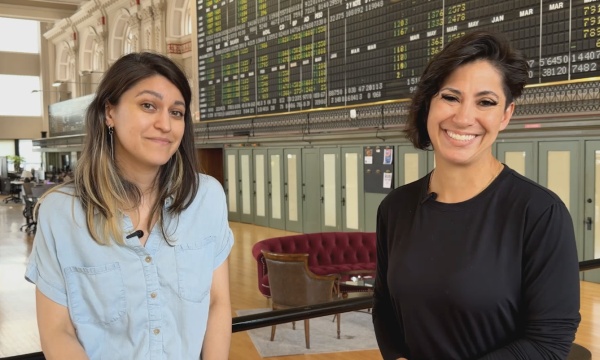
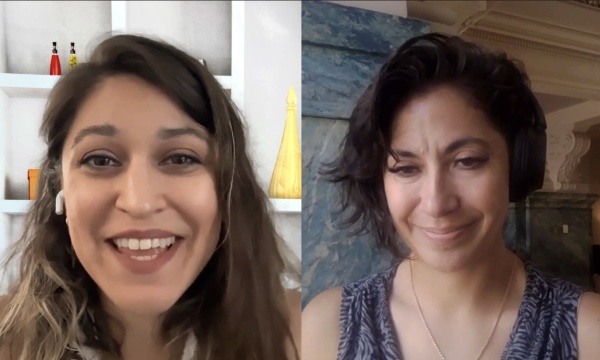
This podcast is for city communications teams and video professionals in government. We talk about expanding service delivery with video and streaming, media accessibility, gear, broadcast and streaming workflows, and more. It's all right here on the government video podcast. The government video podcast is brought to you by MediaScribe from Tightrope Media Systems. Tightrope believes accessibility should never be an afterthought. It should be built in from the start. MediaScribe's award winning captioning and audio descriptions is your end to end solution for accessible government video. Visit mediascribe dot a I to start your free trial today. Hey, guys. Welcome to the government video podcast. I'm Pete Cefinho coming to you live or pseudo live from Infocom twenty twenty six. As the show wraps up, we were able to sit down with two companies. We sat down with Sennheiser as well as PTZ Optics, talked a lot about courtroom venue. We talked a lot about city council meetings, how we can deliver things that are budget friendly. So we're looking forward. Two conversations, one workflow. Let's do it. Hey, guys. I'm here with Charlie Jones, the senior partner relations manager at Sennheiser. Welcome. You, sir. Podcast. Appreciate you. Many info comms have you been to? Oh, wow. I think this is about my eighteenth or nineteenth. Okay. So you're an adult? Yes. Eight sixteen years. I actually have adult children even at this point. So that's long before, like, the Orlando versus Vegas. Correct. And and, Infocom is it's been neat watching the evolution of this show over the years as what went from really a a a lot of slide decks and overhead projectors. And now we worry about things like inclusiveness and equity and how do we make stuff accessible for everybody. And so it's been kind of cool seeing the industry follow the overall bigger trends. Gotcha. Yeah. So I was I was like, I go to this show for a while now. I go to like, NAB is out here. And somebody once was like, how many nights have you spent in Vegas? Oh. And if you add it up, like, all of a sudden, you're like, I I've spent a year. Yeah. I've spent one year in hotel rooms at anyway. I'm glad you're glad you're here. So how did you find your way into professional audio? How'd you get into the circus? Yeah. So, I got into this I fell into this like a lot of people. Right? You know, this isn't a career that most people start off with. But, in my case, I grew up in a very religious household. So I was, at the church every time the doors were open, whether I wanted to be or not. Okay. So I started bugging that guy that sat in the back up in the balcony. I'm like, well, hey, what does that stuff do? He realized he saw the opportunity for some free help there. And so he taught me the basics. I managed to turn that into a career moving back line gear, which turned into an installation career. Now I've been with Sennheiser for fourteen years, just as his last most recent part of, my audio video career. But, yeah, I'm pretty worthless for anything else out of AV these days. Alright. You're like, this is my this is my thing. This is my is my thing. What's so we're at the last day of the show. You've probably been tied to the booth for a lot of it. If you've been able to step out, like, what's what's exciting? What have you seen at the show that, is pretty cool? Well, I I think what's been pretty cool for me has been seeing the different ways that, you know, AI these days is almost, a bit of a, let's be, it is a buzzword, right? Everything's AI is that. But here we actually got to see some solutions where AI is starting to be incorporated into things and starting to be implemented in ways that genuinely add value and not just novelty. It's not, Oh, wow, that's neat. It saved me from saying, Hey Siri, but no, actually genuinely adding benefit. And, and I think that's something that is going to continue and actually speed up as we go forward. Sure. Yeah. And this, every time you go in, you start doing stuff with like, oh, and now what can I do? I can do this, and I can do that. It can do that. It doesn't need me to tell it to do that. Alright. Let's let's dive into it. Sure. So garbage in, garbage out, familiar principle. So the quality of what the microphone can capture is pretty darn important for us, for selfishly, right, for what we're doing with translations and captions. So what separates professional audio from good enough? And why does that like, why does that matter? Yeah. No. I mean, it's a great question. And and honestly, I I think this kind of goes right back to the whole AI point, right? Which is that whether it's for an AI agent or bot or whether it's for software that's looking to transcribe or translate, what you pick up is so important because if there's a lot of noise and there's a lot of artifacts, this makes things that much harder. Sometimes you use the nuance of what's being said. So it's very important that we pick up quality audio. And so with Sennheiser, now we're on our eighty second year as a microphone company. And so with that, we've really spent a lot of time over the years figuring out what works and what doesn't work. And one of the things that's a very key principle for us is that you can't replace, well, you have to adhere to the true laws of physics. And so that's where, for example, like with this guy, we're actually using a discrete actual microphone capsule here. This is not what's called a NIMS array, which is the microphone that's used on your mobile. Sure. Which if you ever tried to have someone listen to a concert through your phone, you know this has very limited So discreet capsules really ensure that everything is being picked up because especially with court proceedings and things, nuance is important. You need to know that that and and why are they stuttering there. Yeah. And that's, that's what we've in the space that we're in, like the users, the users of these microphones aren't audio engineers. Right? It's someone from the community having getting three minutes to speak to the council or it's people on the council that maybe it's a part time gig. And so that their behavior around a microphone isn't ideal. No. Right? They sometimes they put their feet up or they lean back or they tap on it. You know? Is this thing on? Lots of first time users. So how do you guys design for that kind of operator when it needs to work? Yeah. Right? Well, the truth is there's no one size fits all. So, you you're absolutely right. I mean, is a perfect example. There's a lot of people that, oh, I'm gonna be on camera. I don't want this in my face. Right. Well, sure, it's out of the shot, but now we're not picking up anything. And so we need quality audio regardless of where this may be. And so that's where we have solutions, everything from like a gooseneck that can be easily manipulated to things like our ceiling microphones that use beam forming technology to where nothing has to be on the table at all. It could be in the town council chambers or in the courtroom, and it picks up everything that's being said in the area without the need for a discreet handheld microphone or something to be placed in front of Yeah, and you won an award for that product here at InfoCum. Congratulations. Did. Thank you. Greatly appreciate it. A lot of hard work by the folks back in Germany on that. That's awesome. That's awesome. Okay. I think my last question. Accurate captioning starts obviously with clean audio. We've seen some, examples where, people in the back are talking. You got people talking over each other, like, not great for captioning to be accessible. How do you think, as it relates to your role, and accessibility, like, what do you got? Like, what do you think that what what's your take? Yep. And that's where, back to the one size doesn't fit all. Right? And so for example, like with those beam forming ceiling tile microphones, one of the things they allow you to easily do is define which areas of the room do you actually want to pick up. So that, for example, we could exclude the audience area where people might be sneezing, coughing Okay. Playing with bags of chips, what have you, right? Obviously. We could ignore that area, or we have things that maybe we do need to use a gooseneck microphone, but we have the ability to put this button that you see on the front. We can define what does this do. If you think that you should have to push and hold this to talk, we can set up the software that way. If you're the kind of person who likes to push it once, have it turn on, push it once, have it turn off, we could do that as well. So rather than trying to teach the customer how to use our products, we'd rather adapt our products to better fit the customer's expectations. Sure, sure. Awesome. Thanks for your time. Any questions that I should have asked you that you wanna share? Well, I just wanna say, we're very excited about this partnership. It's a relatively new partnership for us and you guys are doing some really neat stuff in a market that currently we don't really work a lot in. So we're very excited to expand our coverage in that market. And if you would like more information about any of these products, you're welcome to come to our website, w w w dot synheiser dot com, or of course, of our partners would be able to help you get in touch with the right questions for the right information. Good deal. Thanks for stopping by. I'll let you get back to your booth. Thanks, Ram. Thank you, sir. Appreciate it. Hey. This is Pete over at Tightrope Media Systems. ADA Title two requires audio descriptions for public video, not just captions, and that's exactly where most government teams fall short. MediaScribe Narrate closes that gap automatically. AI audio descriptions that require no scripting, no extra staff, and is built for government workflows. Right now, we're running a limited time offer called Access Granted. The first one hundred qualifying organizations to apply get a full year of audio descriptions on us. This takes care of you right up to the next April deadline. Click the link in the show notes below to apply. It only takes a couple minutes. Now, back to the episode. Hey, guys. I'm joined with Claudia Barbierro, the director of global marketing at PTZ Optics. So we're here at Infocom last day winding down. How's the show been? Very, very exciting. Exciting. It's been very busy, and I know a lot of people say that, but what's been busy about it is the range of people that are coming to really learn about what the next step in AB is. Not a lot of earth shattering news in terms of the technology. Well, because we're pretty advanced technology wise. But what's really exciting is now what you can do with it with software, computer vision enabled technology, and visual reasoning. And so there's been some really, really interesting discussions this week. So, I wanna know a little bit more about you and your background, and then a bit about PTZ Optics. Well, I've been in marketing all my life and worked for some interesting companies. But I am born out of, ProAV and live broadcasting with companies such as, Crestron Electronics and Live View. And then recently joined PTZ Optics because, for me, that first mile, the source of the video input, is a pretty important part of, the technology ecosystem. PTZ Optics is actually born out of ProAB as well. It started about forty years ago as a company called Haverford Systems. They're a local systems integrator in the Pennsylvania area and realized, they couldn't find great cameras for the conference rooms. And so they designed and developed their own pan tilt zoom cameras. And about twelve years ago, launched PTZ Optics, and there's been no looking back since. And now it's grown to a full product line that serves a multitude of Pro AV and broadcasting applications. In January of this year, we became a hundred percent employee owned company, and it's really exciting time. Yeah. Yeah. So our audience, right? Government. They usually have one person. If they're lucky, they have two people kind of running the entire production of these public meetings. And this goes beyond government. I think there's a lot of situations in education, definitely in houses of worship, where it's a similar thing. A good quality broadcast, but it's usually a volunteer. And it's usually someone who's just maybe an armchair, sort of interested in the tech. But there's also that time where it could be maybe that person isn't available at that time of the broadcast. So in this idea of a PTZ camera in terms of what that is, in case the audience doesn't even know, think of it like a robotic camera that can actually move, zoom in, change direction. So what that allows you to do is actually create that automation so the person volunteering to produce the broadcast doesn't have to also be the camera operator. And because the technology is easy to integrate and use and let's say automate, you can have multiple cameras which now all of a sudden can help elevate what would have been a very simple single camera shoot. And in the case of definitely public safety or communications, the more dynamic the content is, the more the public is actually gonna stay with it and watch it. And so PTZ cameras, especially with them being affordable, small, and able to go put them in a box, take them out really quickly, and set them up, allows people to focus on the contents as opposed to on the production. And a lot of times, the applications that our listeners and viewers are in is like, sometimes it's an old historic building Correct. And the only place they can put a camera is like way in the back. Hearing that, you've got you've got the zoo, like, you can make that happen without having to, you know, drill holes. Well, and and that's the other thing. These these are not gigantic, big broadcast cameras that you have to lug in, and that you have to run miles and miles of cable. They're meant to be agile. We even have accessories that allow you to now transmit and power the camera remote. So if in a in a building like that, you can come in, put your Trifad up, have your camera, and have still high quality broadcast grade video, in an environment that's temporary or that you can't have a fixed camera. But especially in courtyouses, I mean, I think that's the number one spot where we see a lot of our cameras going because these are buildings that are a little dated in some cases. But even the newer ones, they weren't built thinking, We need to put cameras in here, and they're not gonna start drilling holes in walls and trying to hide things. So, being able to have that agility to put it in different areas of a room, let's say, whatever that room is, is really important too. So, what does it mean to design a camera that gets out of the way? So, again, being able to put a camera now in a unique position. I don't think you can see it on camera, you know, you've got one of ours on display up at the top of this little backdrop here. It allows you to capture video from a variety of angles and not have it be visible, which in certain situations can also be off putting and upsetting. These are not security cameras. I think people are used to seeing that. People may get a little stressed thinking they're being reported. We have a lot of healthcare situations where, you know, people are in vulnerable situations. So having the camera not be engaged, not having to have somebody fiddle with it and make someone feel self conscious is very important. Knowing that you sort of set it and forget it, both for the operator, but then also for the subject that's being filmed, is really important. Because we do wanna be sensitive with privacy and information, and, you know, these are things that, you can say, Hey, you're being reported, but it's a lot different when there's a big giant camera in your face. So, public record Yeah. How do you guys think about the reliability in that environment? That's a topic near and dear to my heart, for my many years in broadcast, and especially in the the, advent with live streaming. I think everyone who had a phone thought, Oh, I can have good quality video and and go live. But, the at the end of the day, it's it's not just about the public record and being able to go back and view things and have actual, real, factual documentation. It is also about, in some cases, having engaging content. So whether it's for record keeping, for security, for storytelling, you're only as good as the input coming in. And that's sound and video. And so that's why we partner with, the leading microphone manufacturers because we believe making that integration super easy. Because at the end of the day, if someone If they can't make out what's being said or seen or in the case of, closed captioning and things like that, it can't be translated to that, what are you doing? What are you doing? It's the most important factor of any type of communication. It's kind of where it starts. So, to me, that's reliability. And you need to have equipment that you can, Especially in the case of where we started talking, where it's a volunteer or it's someone that could be a different person taking the equipment out, using it every time. That needs to be foolproof. And sometimes, going with something that's less expensive is actually gonna cost you in the long run. But I also wanna make it clear, it doesn't mean it this If you need to get into it and you need to start buying this equipment and starting to grow your operations, that you have to have a massive capital investment either. It's really about partnering with companies that understand this and you can trust that do deliver good quality. And you've got quite the lineup too. You can say, like, we need this has to be broadcast. We need SDI video come out the back, where a lot of the other platforms are like, to do HDMI, we need to convert that. I think that's one of the benefits. Not to say our cameras are overengineered, but it was If you look, on the back of that camera, it has every port imaginable also, you know, WebRTC and NDI, and all the words, Salad, that what I would love to convey, though, is it's okay if you don't know what that is. You know, again, the It's the same type of lens quality, functional software controls that were designed for high level broadcast engineers, but not for a broadcast engineer to have to operate. Everything can be operated either with traditional joystick control, where presets can be done, through a web interface, where we have even more advanced controls, color balancing, managing it across fleet of cameras, to now, you know, we're experimenting with companies that are developing natural language AI prompting. So now, we're only this close away from being able to do talk to text saying, you know, when this person starts speaking, I want you to zoom in closer. Or if something happens, you know, go to a wide shot. And you can actually just communicate that in in real time. It's getting simpler and simpler. So it's a combination of having great, obviously, lens quality, great camera movement, and, software and integrations that make it easy with sort of one touch integrations or direct APIs. Again, not to sound crazy and have people panic and go, I've gotta learn all this stuff, but just to know that we can make it easy to get started, and then to grow and still have a very professional level quality. Because a lot of, a lot of our customers, it could be a very small community, government, court system, the fire in a very small town. It's also in the LA district where we have And that's basically a full blown production company they have. So it's the whole spectrum. And that's what I I wanna encourage everyone to say is, you know, you may be charged with looking into this. You may be charged with having to come up with the solution. It's not as overwhelming as you think. You know, it it it has gotten easier to implement. When you partner with the right companies, you are future proof because as the software develops, that that camera you invested in will still work. Although, will say it is worthwhile to be looking at things like four k, because that really is gonna future proof you. Because the quality there is maybe something that might be overkill if you're only going to YouTube or something like that, or if you're just recording it. But now you really will be ready for the next evolution of what you need that video to do for you. So, the time is kind of now. The the the cost has come down. The ease of use has come down. It's it's a very accessible technology to get involved with. And we could do a whole episode Yeah. On budgeting and the life cycles and all that. Specifically budget, how do you how do you approach, like, we have a little bit more money, on budget. Like, how do you approach delivering these, like, professional results Yeah. But also at a price point that just makes sense? I think it's very affordable, but that is But that is why we have a nice range too, so people can get started. We even have fixed cameras that have what's called an EPTZ function. So if it's something that people really need to start out small, maybe they only need a 1080p camera, You can have a fixed camera. It can be mounted, but then there is a, digital zoom within that. So you can almost get the sort of two in one aspect with with for the cost of one camera. But, no, the the the goal is we do have higher end we have a high end broadcast camera that's coming out, towards the end of this year for those types of applications. But our portfolio is really built to serve a wide variety of customers and meet them where they're at in their evolution. Because the goal is, not to buy a more and more expensive camera, but to be able to grow their production, to be able to add more camera angles. So you can start with one and then quickly add and grow and make create more dynamic, whether it's coverage, whether it's courtroom content, whether it's, news releases, you know, public safety information, whatever it may be. The idea is to allow people to grow. But we do have a full a higher end range too for, you know, sports and and breaking news and things like that. The idea is to say that you may have a whole variety of our cameras in the mix, and they can work together to combine for a dynamic production. It's not like you're locked in to anything proprietary. Being here at Infocom, that's kind of part of what I do is once people come to the booth, they're like, Well, where are we going with the conversation? Are you looking for high end sports? Are you looking for one camera? And that's what's great about this industry is there's always new people coming in because they're, coming to a show like this to learn, and there's not very many places too. This is one of the the better ones. I do actually encourage it. There's a great government track here, higher education track here, obviously, corporate enterprise. It's not just for the systems integrator or the AV integrator. It actually is great information for the IT managers, the AV managers, or even the people the comms people and the marketing people in some cases. They need to learn about it. Yeah. I think unlike a lot of the other shows we go to, the the education part of this that started, I think, like, last Saturday or something, It's like it's almost just as big as the show And a lot of the other shows, the day before, they do some discussions. And this was great. Thank you, Claudia No. I'm thank for having me. I enjoyed it. I think that's a wrap. We're winding down Infocom. Just a couple hours left. A great way to close things out. Thanks for joining us. We've been doing demos all week, demoing the things that we just got done talking about. So it's super exciting. Thanks again to Sennheiser. Thanks to PTZ Optics for stopping by. Yeah. Looking forward to digging deeper. If you guys have interested in interested in MediaScribe, feel free to check out our website, mediascribe dot a I, and we'll see you next time. Thanks.