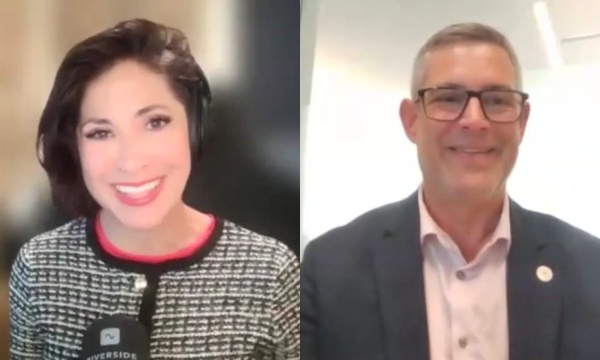
Michelle - Intro: This podcast is for city communications teams and video professionals in government. We talk about expanding service delivery with video and streaming, media accessibility, gear, broadcast and streaming workflows and more. It's all right here on the Government Video Podcast. Episode Sponsor: The Government Video Podcast is brought to you by MediaScribe from Tightrope Media Systems. Tightrope believes accessibility should never be an afterthought. It should be built in from the start. MediaScribe's award-winning captioning and audio descriptions is your end-to-end solution for accessible government video. Visit mediascribe.ai to start your free trial today. Dana Healy: Welcome to the Government Video Podcast, your essential resource for all insights related to government communications, video, and technology. I'm your host, Dana Healy. Today, we're diving into a program that sits at the heart of accessibility and digital equity right here in Minnesota. Our guest is Amy Perron, the program director of Minnesota STAR Program. STAR stands for A System of Technology to Achieve Results. For nearly a decade, Amy has served Minnesotans through roles that spanned across state government. She brings a deep knowledge set on administrative and operational background, with experience spanning technology, client services, accounting, and cross-departmental leadership functions. In her current role, there has been a statewide effort to ensure every Minnesotan has access to assistive technology that they need to live, learn, work, and play. In this conversation, Amy and I are going to explore what assistive technology, means today and the most impactful tools that people may not realize they qualify for, and how STAR's Try Before You Buy Loaner Library is really transforming access across the state. We'll talk about funding barriers, statewide training opportunities, emerging trends, and most importantly, how cities and communication teams can partner with STAR to better reach Minnesotans to be able to have access to these resources. So if you are a city leader, a communications professional, an IT manager, or anyone that's working to improve accessibility in your municipality, this is a must-listen to episode. So let's get into it Thank you so much for joining us today. Super excited to have you on to the podcast Amy Perron: Thank you so much, Dana, I'm thrilled to be here today. Dana Healy: So for our listeners, and viewers that are watching, that are new to STAR, how would you describe the mission and who the program is designed to serve? Amy Perron: That is a fantastic question. So STAR is really an acronym that means Systems of Technology to Achieve Results, which as you can hear, is a mouthful, so that's why we go by STAR. But, STAR is Minnesota's federally funded Assistive Technology Act program, and all of the states in the US and six territories have a program similar to ours. We all have the same core services. For us here in Minnesota, STAR's mission really is to help all Minnesotans with disabilities gain access to and acquire the assistive technology that they need to live, learn, work, and play. Dana Healy: that's fabulous. What a, it, it feels like a hidden gem of a program. So how long has STAR been around? Amy Perron: You know, that's, we hear this everywhere we go that we're Minnesota's best-kept secret. The program itself has actually been around since the early '90s. And, you know, being within state government, we are very careful on the money that we spend and how we spend it, and really ultimately our, our biggest goal is to serve Minnesotans in need. And we don't typically spend much money on marketing or advertising, and so that's a problem in regards to getting the word out about the work that we do. But yes, we've been around a very long time. Dana Healy: Well, I think a lot of our listeners who are also working in the government and municipalities would totally understand that. So how would you define assistive technology, and what are some of the examples that people might not realize fall under that umbrella? Amy Perron: Sure. What a wonderful question, and I think it's really important to define what assistive technology is, is, at least in our minds, just so we're all on the same page. That's typically when we work with folks, that's typically where we start is to make sure that we both are on the same page as far as the definition. But I would say that assistive technology is something that helps someone do a task more independently, safely, or comfortably than they would be able to do it without that tool. Now there, of course, is a federal definition that is, you know, three times as long and you scratch your head after you hear it, but you know, this is the short and sweet of it really. It can be anything, but ultimately it's gonna allow that person to do something more independently. When you ask about examples. So an obvious example would be I'm wearing some eyeglasses right now. Without these eyeglasses, I'm not able to read written text on my own. So these, these glasses are very integral to my daily life. Another example of something that would be probably easy for folks to identify as, assistive technology or in the world that I live in, we just refer to it as AT, would be, say, an amplifier. So if, you go to a conference or a meeting and you're sitting in a room, a lot of times people are using microphones, just to make sure that everyone can actually hear the content that's being spoken. And so for some of us without a disability, that is a convenience, right? We're, able to hear things a little clearer. But with, with a disability, we may not even be able to participate in that event. My favorite example though of something that is not necessarily recognized universally as AT would be my smartphone. So for all of us who have a smartphone, we use it for communication, right? We, we get our calls and, sometimes we'll do additional things like get emails and pay bills and all of that type of thing. But imagine that you are unable to read a bottle at the grocery store, a medication bottle, and you need to buy, some Sudafed, and you need a particular milligram, and you're not able to see that even with your eyeglasses. So I'll take out my cell phone, I'll take a picture of it, and then with the pinch and zoom feature, suddenly it's huge and I can see it. Other examples would be speech to text. So maybe I am unable to type on my phone, but if I turn on that speech feature, I can go ahead and send a text to someone. Or, even now with our phones, there is a way where you can text your response, and then it will be read aloud for someone else. For those struggling with executive func-functioning, maybe you're gonna use that phone for note-taking, for reminders, events, all of those types of things where, again, for you and I, if we don't have that executive functioning disability or difference, we're gonna be okay. We're gonna get by without that additional support. But for someone with a disability, this can be life-changing. Dana Healy: That's such an interesting scope. So immediately when I think of AT, I think of screen readers, right? So people go to websites and the screen reader will crawl to be able to, to say the, the words that are on the screen. But your, definition just, like, blew my mind because really, like, a- anything related to tools can help with that. So, like, I use note takers in virtual meetings all the time. That could be seen as assistive technology, with this definition. So I think that's really important for folks to understand how wide this really is. So thanks for that perspective. That's amazing. That's great.
Amy Perron: Absolutely, and I, you know, I'd like to throw in there too, there's th-the curb cut effect. And this is something that a lot of people just don't even think about. But as you're, you know, trying to navigate your world and you're out on the street, If you are a person who is blind and we've got a curb that's cut out, it's, it's dipped down, and now start, start looking now after this, this conversation, a lot of times you're gonna find on the corner where they've added some tactile differences. Maybe there's some bumps, and for someone who's blind and using a cane, they feel those bumps. And then they, they know that we've got this corner coming. Also, someone using a wheelchair is gonna benefit from this curb cut, right? But, you know, moms with, with strollers or folks with big baggage, things like that, we all benefit from this universal design. And so a, a cellphone I think is such a great example. Dana Healy: Yes. That's right. The curb cut effect. I love that. I was at a show recently and I had my kids and a wagon filled with stuff, and I was like, "Find the curb cut kids. Where is it?" So it does. It just, it helps everybody's quality of life. Hey, if you're enjoying this podcast, you might also like our webinars. We host live sessions where we dig deeper into topics that matter to media makers and government, like accessibility, compliance, automation, all of it. Join us live to ask questions or browse our on demand library whenever it fits your schedule, click in the link in the show notes to check out what's available. Dana Healy: So Amy, can you walk us through STAR's core services? I think I, I saw some device demos, loaner program. Maybe you can start with a few of those Amy Perron: Absolutely. I would be more than happy to share that information with you. So, you know, as I mentioned early on, we're federally funded, so our, our federal grant dictates the services that we provide, and it's very clear. So, there's a lot of things that we'd love to do that we currently aren't doing, but what we do, right now is information and assistance is probably our most common service, where folks will reach out to us with questions, maybe about assistive technology, where to get it, what does it cost, how do I pay for it? All those types of questions. Then next I would say is device demonstration. So here's an example where someone maybe has identified a need. Let's say you've got some vision loss, and you're using your eyeglasses, but you're still struggling maybe to read your mail or something like that. So what we can do is after having a one-on-one conversation with the person, we refer to that as person-centered. All of our services are person-centered. We will have a conversation and, we as professionals will identify some technology that we think is worth this person investigating. And so then we will show them these devices. Maybe we're gonna say some digital magnifiers would be a good idea. So we'll show them three or four different magnifiers, and we'll focus on the features, the tools that are built in in each of these devices. And I always compare it to a car. You know, our cars get us from point A to point B, but we've got Chevys, Fords, Toyotas, all these different brands. And ultimately, as a consumer, I'm gonna see one brand that I like better. So through this device demonstration, I'm able to identify which one I really like over the other. What happens oftentimes, though, is after this brief thirty-minute demonstration, people are scratching their head going, "Yeah, I, I think I like it, but it's really expensive, and I don't know that I just wanna go out and buy it." So this is where they can then borrow the technology from us at no cost. Think of your traditional local library where you go and you check out a book. We do the same thing here at STAR with assistive technology. So consumers can borrow this tech for forty-five days at no cost, bring it with them into their environments. And if they were to purchase this technology, where would they use it? That's where you wanna try it. So we think of this as a try before you buy program. At the end of the forty-five days, the equipment does have to come back to us, but we'll have a conversation at that point. Did you like it? If you didn't like it, what didn't work for you? And then we'll see if maybe we can come up with other ideas or solutions. Another loan program that we have, it's, it's also a device loan, is for older equipment. So an iPad is a great example where it seems like every year or two they're updating their, their systems and providing newer devices. With each iteration, there's more and more built-in accessibility features, more tools in there. So the newer the device, oftentimes the more you can do with it. But some of these older devices, let's say I have a five-year-old iPad in the lab, it's not the latest and greatest, but it's still functioning perfectly fine. So maybe we've got a consumer who is, got some mobility limitations and they're unable to travel a lot, and they need to do, doctor's visits via video call or telehealth. We will let them use that device indefinitely. If we know that they just don't have the funds or the resources, they can borrow it from us as long as they need it. We have some tech that goes out for four or five years. As long as it's still of benefit to them and they're still able to utilize it, we say hang on to it. Once it gets to a point where they're no longer using it, they send it back to us. We sanitize, test it, and if everything's working, then we'll find a new, a new temporary home for it Dana Healy: Oh, wow. I didn't realize that you had the, the older technology that was available for that kind of loaning. So what does like the, the types of technology in your library that you have, like the, to loan out? Amy Perron: Yes, categories. So again, our federal funder dictates to us or, defines to us what these different categories are. And I would say, I'm gonna give you just some high-level examples. So we have technology for vision loss. We have technology for hearing loss. We call it communication technology. So, so maybe it's for someone who is unable to communicate or maybe someone has a very soft voice due to a disability. Parkinson's is a great example. There's a disease that will progress and as the disease worsens, oftentimes people have a hard time voicing loud enough for those around them to hear. So communication. Also we do things with cognition or sensory. So if we've got folks maybe on the autism spectrum or neurodivergent folks, there's lots of different tech that can help with that. Mobility aids. There's 10 different categories, but those are the most common ones for you. Dana Healy: Yeah. Wow, that is a, that, that's a lot. So let's talk about funding. So oftentimes funding can be a barrier. How does STAR help residents navigate purchasing options, waivers, grants, things like that? Amy Perron: It's, uh, I think the toughest part of the job, right? Is we know that there's a lot of great resources out there, but we know that, money is tight, and we wanna make sure… You know, that's part of the, the advantage, I think, of the demo and loan program, is when you make a purchase, you can be confident in the purchase that you make and know that this hard-earned money you have is gonna be c- put to good use. As I mentioned, after the 45-day loan, the equipment comes back to us. And, we'll have a conversation with the individual and actually we'll, we usually know on the front end as far as what type of services that they are receiving. So if it's an individual who is on county waivers, we do know that the majority of assistive technology will be funded under the waiver, as long as we can show that there's truly a need for it. So we can then let the consumer know, where to purchase the tech or, we could work directly with their county case manager and connect them with vendors who are able to bill waiver services. Additionally, if we're aware of any grants out there that are able to provide funding, funding, we'll introduce them to, to those resources. And then sometimes we have to get creative. Sometimes people are gonna have to do something like a GoFundMe or, crowdsourcing type event, which you don't wanna do, but, when there's a need, sometimes it's, it's worth the extra work. So we can kinda guide folks through on that. Another thing that I'm really proud of here at STAR is we work very closely with all of the other disability-related agencies, and we kinda know our lane. So if, if people reach out to us and there's a need, and certainly funding could be part of that, if we're unable to help in the way that they need, then we will definitely make connections and introduce them to other options or resources that could potentially help. Dana Healy: That's really helpful. It, sometimes it can be so intimidating to go through all of those ty- types of funding processes, and for you all to be so well-versed in it and connected to all these other government programs, it sounds like a very helpful network and process for folks that, you know, might be new to the whole thing. Amy Perron: Absolutely. And you know, another really important thing, Dana, to bring up is I think for a lot of people it's hard to ask for help. Even just making the call to us, is sometimes hard for people. Especially with the baby boomer generation, I see that a lot where they're, they're proud people and, I don't wanna, you know, stereotype, but typically we'll see this where folks are very proud of what they've accomplished and what they've done, and they don't wanna ask for handouts or, freebies, things like that. But ultimately we find that as we sit down and have a conversation with folks and introduce them to assistive technology, make them a little more comfortable that, you know, this is a commonly used resource, a lot of people are using AT, and sometimes you don't even realize that they're using AT, and it's okay to ask for help. And ultimately it's just gonna make your life better. Dana Healy: Is there any like age restrictions or anything like that? Is it available to everybody? Oh, it is. Wow, Amy Perron: It is. So to, to borrow from our program, the only requirement is that you are a Minnesota resident, okay? We work with all different groups. So we'll work with the, an individual with a disability. We'll maybe work with a caregiver, a professional who serves them. We do a lot with the school districts, senior living programs, things like that. So birth and to end of life, we cover all of those categories. I wanna tell you too, that we are a team of three, so we're a very small program. Now, the way we've managed to serve as many people as we do is through contract partnerships, and so we work through a number… We work with a number of programs throughout the state, and really what our goal was is to try to have physical resources as, in as many places as possible in the state. So we've got partners in Moorhead, Duluth, Rochester, St. Cloud, uh, Bloomington, and then also we've got a couple partners that serve statewide. So they do travel throughout all of the counties. Dana Healy: Oh, that's tremendous to be able to use all the partnership to kind of push out the, the mission and the work that you're all doing. What about trainings? Can you talk about, like, does, does STAR have a role around trainings on assistive technology? And that's interesting that you bring that up specifically around websites, 'cause, a lot of our cities are going through that right now, ADA Title II and WCAG, WCAG compliance right now. So that's, that's really great that you're offering different types of training on the, the larger scale. So let's talk about awareness gaps. So what is something about STAR that you wish every Minnesotan would know, like right now? Amy Perron: we're here.
Which how sad is that, right? We, we've been around since the early '90s. it's really a challenge, especially in the healthcare field. we see such a high turnover rate, particularly in human services, and, social services. So I'm thinking of like county case managers and things like that, ADA coordinators within businesses. those particular groups that we typically try to focus on, we see a high turnover rate. and now with the baby boomers, we're seeing a lot of retirements taking place, things like that. So it's-- I think it's really important that we continue to do things like this, where we meet with individuals who are able to spread the word about the work that we're doing. you know, I'm hoping that your listeners keep in mind that if, if this is something that has struck a chord with them, and if they think that, it would be helpful to learn more about the work that we do and how we can help these specific groups, reach out to us. Let's, let's have a conversation. And, a lot of times just what it is is, it's, introducing a new concept that folks haven't really thought about. if you don't have a disability, if you don't care for someone with a disability, oftentimes you're not even gonna think about what is needed for a person with a disability. So, you know, e- we know today about one in five Minnesotans has a disability. As we age, that percentage increases. So by the time we, you know, if we're fortunate enough to live to be 75 or 80, almost 50% of us will have a disability at that point. So it's, it's so important to familiarize ourself with these tools and resources Dana Healy: so where can folks find you? So if they were going to like, put in a website or an email address, what's the best place for them to find STAR and access to any of the trainings or the, loaner program? Amy Perron: Absolutely. So we have two main websites, and I think the, the first one that I would direct, viewers, listeners to would be our main website, which is the STAR's site, and the, web address is mn.gov/star,
that's S-T-A-R. Again, mn.gov/star. When you go to that website, it's gonna give you a lot of information. it's gonna define assistive technology. It's gonna tell you about the different services that we have available. It's gonna link you to our YouTube channel, where we have a lot of recorded videos and trainings. it's also gonna give you an opportunity to sign up for our newsletter, which comes out quarterly. In each newsletter, we try to, or we do highlight one of the different services that we offer. We, feature one of our, partners, our contracted partners. We also have, an advisory council, so we do introduce our council members and have them share information about the program. So you really can learn a lot on, in our quarterly newsletter. the other website that I like to send folks to is, our lending library website, which could also be accessed from that main site. But the lending library is mn.at, the number four, all, A-L-L, .com. So again, that's mn.at4all.com
In addition to STAR's equipment, our contracted partners also have their equipment on this website, so it's a really great resource for all of Minnesota. And the way it works is if you're interested in borrowing a piece of equipment, you just go onto the website, do some browsing. if you know what you want, you're gonna just create your own account, put the device in your shopping cart, and hit checkout. we will then reach out to you with next steps, have a conversation again about, the needs, the struggles, what are you good at, what are you, what are you unable to do, and then we'll take a look at the tech you're requesting, try to figure out if this is the best place to start. you know, it's really important that folks know when you come to STAR or one of our contracted partners, we are non-biased. We do not, take donations from manufacturers. We are neutral. so it's, it's, it's a safe place to come. we are discreet. We do not share your private information. If, if you're kind enough to give us your personal story, we take that to heart, and we wanna help. so please know that when you go to these websites, we're gonna do the best we can to serve you. And if we can't assist, we're gonna connect you with someone who hopefully can continue on your journey. Dana Healy: Amy, this is amazing. What a fabulous resource, STAR is for folks in Minnesota. any last thoughts for our listeners and viewers that you'd like them to know?
Amy Perron: I would just say please reach out if you have any questions at all. If, if you are doing some planning for the next year, maybe for events, facility updates, things like that, think about all your residents, all of your citizens, and for what you're planning, is this gonna help everyone? Are-- is access gonna be difficult for someone? Or, you know, are there tools in place to help them when they go to the library or when they come to the city offices? We're happy to talk with you about this, and if we can make recommendations, we will do it. Dana Healy: Awesome. Thank you so much for your time, Amy. This has been, super insightful and, very helpful for our listeners and viewers. Amy Perron: Wonderful. Thank you again, Dana, for having me. Dana Healy: Well, that wraps up today's episode of the Government Video Podcast. A huge thank you to Amy Perron for sharing her expertise and the incredible work that she's been doing with Minnesota STAR Program to expand access to assistive technology across our state. So if you're a city leader, communications professional, an IT manager, director, or anyone serving folks in municipalities, I'd encourage you to check out STAR's resources, get familiar with their, referral resources. And if you've enjoyed this episode, please, like, comment, share with a colleague. That would be amazing. We hope that we see you for the next episode of the Government Video Podcast.