The web is a place of public accommodation. We had a lot of companies saying websites weren't because the if I don't have a physical presence for my store, if my store is just online, the ADA doesn't apply to me. And that's where we started to see the shift of the application of the ADA. Other lawsuits ensued. One thing that we've learned from watching website and accessibility lawsuits over the last two decades or so is that the less we regulate it, the more we sue. So if there isn't a legal definition of how something should work, then there's more murky water. People don't know what to do. People file lawsuits. Hey, everyone, and
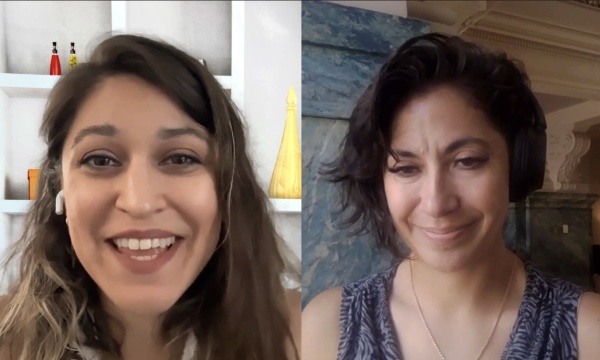
welcome back to the Government Video Podcast where we explore how local governments and community media centers use video and live streaming to better serve their community. I'm Dana Healy. I'm your host for this special live episode this week, and today's focus is on accessibility in digital media because it's been thirty five years since the passage of the Americans with Disability Act. While the ADA originally focused on physical spaces, today that fight for accessibility has moved to a digital space, which is just as urgent. Increasingly, these digital spaces are super important for all of the community members as well. Websites, mobile apps, and online video has really become the new public space, And it's important for everybody to be able to access this essential information. So from historic milestones to firsthand stories, this episode will have it all. We'll explore how when digital equity became part of the ADA conversation and where we really should go to next. So I'm really excited for our guest. I'm joined by Lynn Wehrman on this live pod today. And Lynn is the president and founder of WeCo, a team of accessibility experts that use their lived personal experiences to perform accessibility audits and more. So, Lynn, I'm so excited that you're here. Thanks so much for joining me today. I'm excited too, Dana. You know, it's a really, really special day. It's the thirty fifth anniversary of the Americans with Disabilities Act, and I think it's really important to mark that. So thanks for having me. So before we really kick off, we have a ton of stuff that we want to get through. Can you tell the folks at home a little bit about yourself and how you became involved with digital accessibility space? Well, I often say that I had a professional and career perfect storm. I started out my working career being cut short when I was in my late twenties due to misdiagnosed mental illness and postpartum depression after I had my daughter. I spent a lot of years struggling being misdiagnosed, trying to figure out what was wrong, not being able to be included in the workforce because I could not function well. And in my late thirties, a psychiatrist and a therapist who knew each other kind of put their heads together and figured out that I had something called borderline personality disorder traits. And it is something that a lot of professionals think is incurable. But I was really fortunate to have access to something called dialectical behavioral therapy that saved my life. So I also grew up in a family where I and my four sisters were all born with different forms of epilepsy. So I grew up having seizures young, being around sisters who had anything from absence seizures to grand mal seizures. Basically, it was a little bit tough being in the Midwest in the sixties and seventies as children and having a disability that was that apparent to everybody at school. So we were always different. We were always kind of on the outside. And I think that that life experience of struggling with what we now know as neurodiverse disabilities and how taboo that was even in comparison to disabilities you could see back then really made me keenly aware of how disadvantaged people with disabilities were. So communications degree, did a lot of sales, wound up in downtown Minneapolis transportation, to launch the Hiawatha light rail line, and found myself in a federal coordinator role at the Minnesota Department of Transportation. I was coordinating a training program for bus drivers and to teach bus drivers how to tie down wheelchairs and assist transit users who lived with disabilities. And kind of through all that, I happened to be brought into the Americans with Disabilities Act transition plan at a time when the Minnesota Department of Transportation realized that they had a lot of inaccessible infrastructure. They were facing potential lawsuits. So the ADA transition plan coordinator said, look. You're good at communications. I had been doing web design for the agency on the side. Can you figure out how to make a website accessible so that when we start to update this infrastructure, we can keep the public posted on it and do it in a way that's accessible? So I went into the homes of the stakeholders who were advising the transition plan group and watched them use their screen readers, speech recognition software, modified mouses, and we became friends and realized that we had a job. We were creating for savvy people who lived with disabilities to advise about their own digital accessibility needs. So that's really how I found my way here and developing a company out of that effort. So was that what was your moment that, like, oh, this is it. This the birth of WeCo. Was it those four individuals and just working with them and say, like, gee whiz, people people need this, and we can do this. Well, I actually remember where I was and what I was doing at the moment. There's a book called big magic. The author did eat, pray, love. She believes that, yeah, ideas run around and tap you on the shoulder and won't leave let you go. The idea tapped me on the shoulder when I was standing across from the desk of the ADA coordinator, Christy Billiard, on the third floor looking out at the Capitol, and this idea said, you need to create a company that can make a difference, that can be a voice for people, that can provide gainful employment for people with disabilities. I fought it because I was a single mother, and I went, there is no way I should be starting a business. I've, you know, I've got my daughter and I to take care of. I need certainty. And I grappled with it for about two years before I decided, oh, thank you. Big Magic Elizabeth Gilbert. Yes. And that book really, really spoke to me. But that's how the company got started really at a time. And I think I think we WeCo really evolved through this time when people started to wake up to the fact that they needed to draw on the life experience of people with disabilities. But I know that particularly in state government, they really didn't want to pay them. It was all about giving people a Target gift card. And I remember a moment when I was speaking at the University of Minnesota's World Usability Day when a state employee said to me, we can't afford that. And my response was, I've been in government. I've seen millions of dollars squandered for efforts that don't make sense. You cannot tell me that you can't pay people with disabilities the wage that they should have as subject matter experts. And I think we really, really, were able to send that message out loud and clear in the Saint Paul Minneapolis area. And I think that we were a part of a wave that really got that changed at least locally. That's really interesting. Let's talk a little bit about the ADA. I mean, it's thirty five years now. Let's talk about the digital accessibility in context to that. Because for folks folks that are watching us, the ADA covers a lot. Like, how many pages is it, Lynn? Like, it's hundreds. Right? And there's different titles to it to applies to different people in different ways. Yep. There are a lot of advocates that that title the ADA as dignity insurance, and I think that's really interesting. Tell our viewers a little more about and listeners a little more about that. What does that mean to you? Well, I think that if you go back to what things were like before the ADA, and I remember that time while I was actually a business owner and the ADA was passed a year after I gave birth to my daughter. And was the whole thing with postpartum depression that lasted for years that exacerbated a major mental illness I had not yet been diagnosed with. But prior to that, there was no accessible curb ramps. There was no law that sidewalks had to have truncated domes. There was no law that said you had to have a ramp to get into a business or that an elevator had to be wide enough for a wheelchair to fit into it. And one thing that I think is important because I'm a little older than most of the people that I work with is that and I'm thankful that younger people don't remember this. But there was and during that time period prior to the ADA, it was very acceptable to exclude people with disabilities. People with disabilities were thought of as a different type of person. And it was very common to assume that people with disabilities did not have the same level of intelligence, that they did not deserve the same standard of living. And it wasn't at all unkindly met. It wasn't that people were ignorant or mean, and I think that context is really important. It was just the accepted norm. And so when the ADA was rolled out, it was really revolutionary. It was what started the paradigm shift that we're enjoying now. But I think it's really important to go back to that time where someone with a disability could be fired for having a disability, not because they could not do the job. This happened in my family. I have I'm second to the youngest in a family of five girls. And my two older sisters, their epilepsy was much more apparent than mine and my younger sisters. My younger sister and I have what's called psychomotor seizures, and those typically for us happened only if we had a fever or at night while we were falling asleep. It wasn't something that anyone ever saw. But my two older sisters had absence seizures or petamol seizures. So there were instances when they were on the job, and they know they had a seizure, and they know someone saw it. And the next day, they were just gone. And it happened so frequently that as a family, we came together and tried to create a plan to figure out how to help them keep their jobs. That was normal. And if you had brought that up as being wrong, someone would say, well, they're disabled. What do you expect businesses to do? They can't accommodate people with disabilities. And I think that that context has really been lost, that how far the developments we've made in human rights, how quickly human rights have evolved in those thirty five years. So when the ADA was passed, a big focus of it was on physical space. Right? Was there any conversation around digital accessibility at that time? I mean, that was, like, it's a while ago. I mean, so do you have a take on that? Well, it predated common computer use. So, of course, it was involved it it was focused on physical space, but it started the ball rolling in a lot of ways. So one thing that I personally note is that it got everybody in the United States to take out and dust off the Olmstead Act. The Olmstead Act is a law that predates the ADA that says that people with disabilities have a right to live within their communities. It's essentially the law that got rid of we can institutionalize people with disabilities. By the way, my grandfather, lived in southern Minnesota and suffered from the same mental illness I did and was repeatedly put into Saint Peter State Hospital because his neighbors complained that he was acting paranoid. That stuff was, like, super normal. So the Olmstead Act changed that. And all of a sudden, you know, people started to realize, hey. The ADA means something. We need to be doing other things. So it started that. But then the digital part actually really started with government with a different law, and it was called the Rehabilitation Act of nineteen seventy three, section five zero eight. And this is because the government decided, okay, We need to have standards for accessibility. We need to be able to decide. You know, they began buying more and more digital properties from private businesses. They needed a way to be able to gauge that. So they hired a company in Japan called Highsoft to develop what we know now of as the voluntary product accessibility template or the VPAT, section five zero eight VPAT. And so section five zero eight is the law that applies to government accessibility. So that's really where we got the early standards from. And I remember when I was working in state government back in two thousand eight on early accessibility work, there were no ADA web rules. The ADA was kinda starting to get applied to digital, but we were really relying on section five zero eight of the Rehabilitation Act. But then, of course, what happens is that we got this wonderful gift called the World Wide Web Consortium. It was a group of smart individuals that decided, you know, there needs to be more cohesive and realistic standards for making the worldwide web accessible to people with disabilities. So they developed the web content accessibility guidelines or what people call WCAG or WCAG, And everybody pretty much got on board. And the cool thing about the WCAG is that it has become a widely accepted universal standard, and that really sped up the motion. In twenty seventeen, section five zero eight got a refresh. That was one of the versions of the WCAG. Then we started to see legal precedents come down the pike with things like the Netflix ruling for inaccessible videos, where was a really key ruling, where a Massachusetts court judge made was really interesting to read a statement because he said, come on. The web is a place of public accommodation. He was the first legal professional to come out and say, this is, you know, this is a place of public accommodation. We had up until that point, we had a lot of companies saying websites weren't because if I don't have a physical presence for my store, if my store is just online, the ADA doesn't apply to me. And that's where we started to see the shift of the application of the ADA. Other lawsuits ensued. Target was a big one, and Target has done a wonderful response to that. They've really gotten involved with subject matter experts. We've seen just, you know, a cascade of cases that have come. So we've had about twenty years of the ADA not having specific web rules, but being applied to the web. So there's a lot of legal precedents. And then, of course, finally got legal clarification a year ago, April, when the web rules were released for governments entitled to. Does that answer your question? Yeah. I just I just go on and on.
I think this something I have all the time. So I think it's so helpful to understand the foundation and the context of which the ADA came up with. And then now we have the WCAG, a way for government to make their spaces more accessible. So what's happening in April around WCAG? Well, the web rules were rolled out in April of last year. One thing that we've learned from watching website and accessibility lawsuits over the last two decades or so is that the less we regulate it, the more we sue. So if there isn't a legal definition of how something should work, then there's more murky water. People don't know what to do. People file lawsuits. In fact, I was just at the Disability and National Conference last week, sat in on sessions on the European Accessibility Act and learned a lot about how they're administering that across the European Union. And some of the speakers said, you know, in Europe, we regulate. In America, they litigate. So in the United States, we have a tendency of, like, saying, okay. Let's start with legal precedence, and then let's fight it out in court, and then we'll make the rule. But in Europe, they do the rule, enforce it, and they don't have the same level of litigation we have. Not saying one's right or wrong, but it's just it's just different. So, really, the ADA was something that was there, and people understood the need for the web rules far in advance of April twenty twenty four. So what it means is that, first of all, the Americans with Disabilities Act is a civil rights law. That's why if you look at cases of website and accessibility or or any cases tied to the Americans with Disabilities Act, you're not going to see large financial awards. What you're gonna see is focusing on the fixes. This was actually explained to me by an attorney at Dorsey Whitney in downtown Minneapolis, that it's a law that's designed to fix things. I think that's pretty cool. So the ADA, the web rule part, has been rolled out to governments. So the criteria applies to government. However, the Americans with Disabilities Act as a whole applies to any place of public accommodation. So that's why you were seeing, you know, Netflix, Target lawsuits, grocery store lawsuits tied to inaccessible websites. That's why we have so many drive by websites, inaccessible website suits that are happening. But the web rules do apply to government agencies, and it's a start. It gives people an idea of how to make a website accessible. You know, do I have to make my social media accessible? Yes. Do I have to have my videos accessible? Yes. And then you know. You know what the measurement is. So then you can meet it. Before we get back to this episode, here's something you'll wanna hear. Picture this. Seamless video access for residents, seamless compliance for you. Whether at city hall or at home, MediaScribe brings every resident into the conversation. With MediaScribe, captions are everywhere you need them on live streams, the web, and beyond, so no one misses a word. MediaScribe delivers accessibility straight to personal devices with live captions and translations wherever residents follow along. No extra apps to build, no barriers, Just clear compliant video wherever your community tunes in. And for your team, it's just as simple. Mediascribe automates the heavy lifting. Captions, transcripts, translations, and compliance delivered in real time. The result? Seamless video access for residents, seamless compliance for you. And behind it all, MediaScribe is doing the work so you don't have to. Mediascribe, compliance made simple, video access made easy. Learn more at mediascribe dot a I. So the deadline for government to be complying with these guidelines is this upcoming April? For governments that serve larger populations, it is April of twenty twenty six. And for special district governments and governments that serve smaller populations, it's April of twenty twenty seven. I'm sure you work with a lot of different governments and agencies. What are the themes of folks right now? What are they concerned about in preparation for that deadline? First of all, I think that the response that I've seen from small governments, and I have a real heart for small government probably because the work that I did at MnDOT worked entirely with small governments. They they were my grant recipients. And these individuals really believe in supporting their communities. They really want to make things accessible to everyone, including their community members who live with disabilities. But they are facing some of the most drastic financial challenges that you can in being in public service. What I've seen, the trend I've seen, is a really widespread acceptance of, yeah, we need to get this done. We've needed to get it done for a long time, and we're just gonna figure it out. I was very fortunate that I was able to speak at some conferences held around the state of Minnesota for the League of Minnesota Cities, and I got to talk with a lot of people. I wanna actually give a shout out to the city of Springfield. One of their employees got up and talked about, hey. You know, we've embraced accessibility. We had a request for one of our concert series in the summer to include an ASL interpreter, and we figured it out. And not only we learned things, we were able to, you know, build up our attendance by about twenty percent because more people who were deaf and hard of hearing attended. But we also found out that it didn't cost as much as we thought. So we're really seeing this around digital. And the second thing that we're seeing as a trend is that people are really concerned about document accessibility. And Mhmm. You know, we have so many documents. We have more documents than we knew we had on the website. And what do we do with those? So we're helping a lot of those clients with determining which of those documents meet the archived exception that don't have to be made accessible. But on the video side too is that a lot of clients are realizing how important video has become in communicating to the public, and they're a little bit hesitant about how do we do this. And Sure. I think those are the trends. That's really important. I love what you said there that there was a twenty percent increase in attendance Mhmm. To those events just because they have an ASL interpreter. It's important, like, to note that by making these changes, especially for government, you're tapping into a whole another population that wants to be there. Absolutely. That's part of their duties of bringing information and pulling a community together. So I just love hearing that. Public services are really increasingly delivered online through websites. We're we're talking apps, public meetings. Can you recall the type of barriers people are still running into even in twenty twenty four. I mean, twenty twenty five. Well, it's probably true for twenty twenty four as well. But Yeah. I think that that people get really stuck thinking this is gonna cost so much. And e even in the time that WeCo has been in existence for fourteen years. And in that time, we have seen such a rapid and efficient development of AI, making videos and live events like this more accessible to people with disabilities. Although I'm gonna bite my tongue because I don't think there's live captioning on this platform. Live caption sorry. Sorry, but we have to complain about that, but we'll do it in post production. But now what we're seeing is that it is so much easier to do this yourself. You don't necessarily have to hire someone. So if you wanna know what the evolution was like for us, having done webinars and videos in the early days, we used to hire, not that long ago, live captioners because YouTube did have live and the and the captioning that was live was awful. Really, it was kind of fun to read, but it was really horrible. We're trying to get something out of it. And so we hired we hired actually a really, really cool little company out of Chicago that was founded by a former World Book encyclopedia editor who was deaf. And it and he had this live captioning service that we really depended on. So, you know, when we would get requests, we would make sure that we had live captioners there. And then, of course, we'd still send everything out for post production captioning like you will be doing with this webinar. Yeah. Absolutely. I think that the evolution and is that there is so much more that's just built into the software. We use automated auto caption AI captioning in Teams, in our daily work, in Zoom, in public events, and it's quite good. We also, the cost of ASL interpretation, particularly if you're doing things online, is not cost prohibitive anymore because interpreters don't necessarily have to drive someplace and take a day. We use not just ASL interpreters, but we use tactile interpreters because we have members of our team who are deaf blind. And we're a small organization, and we are able to do this. So I think that the fears about cost and it taking too much time and us having to figure it all out, those days are really gone. And that's what we like to assure people about is that, yeah, don't shy away from video. It is a way that people connect. It's where we're at right now. It's like you said, it's the marketplace. It's the the town square. And there are ways that you can include everyone within budget. So let's pull on that a little bit. Local government teams, they're overwhelmed by the scope of WCAG compliance. What would be a key message that you would want them to hear? That doing something is better than doing nothing and that Okay. You start with a diagnosing where you're at. That's usually a manual audit that's recognized by the Department of Justice and ADA inaccessibility court cases. We've worked on those for years. So that's what we've seen is accepted legally. But, you know, hire an expert, and there are ways that you can get this done without breaking the bank. There are experts that can look at maybe not your entire website, but the template pages and give you an idea of where you're not accessible and provide you with remedies. Organizations like ours do that. We also sit down and help people remedy it themselves. What you don't wanna do is hire a company to remedy it for you. You wanna figure out how to do that yourself so it's sustainable because websites change all the time. And if you don't learn how to make your own changes or you don't hire a web hosting service or a web developer that's willing to do that, then you just keep coming back to the same thing of an inaccessible website. So, you know, it's diagnosis is the first thing, and then you can create a plan. And organizations like ours are here to help you make a plan. I used to spread sixty thousand dollars around the state of Minnesota for a year to train all of its world transit bus drivers in accessibility. If there's anything we're good at at WECO, it's taking a tiny budget and figuring out how to make it work. And there are organizations other than ours that do that too. But, you know, start with diagnosis, create a plan from there. So a theme that I I've heard is folks want to make everything accessible right now, but then it's like it's a switch, like an on or off switch. What's your thought about that? And I'm kinda leading it a little bit as like accessibility as a journey. Okay. So I think, Dana, you've heard me tell the story. I love to tell. I was the only accessibility specialist for the state of Minnesota back in two thousand eight. No one knew what it was. I didn't even know what it was. But I went for education, and one of the projects I worked on there was to work with a group called Digital Design Services at MnDOT. And there were about thirty people in that group. I worked with the Great Lakes ADA Center and devised a plan. This is before Microsoft even knew how to make their own documents accessible. I and Janet Peters from the Great Lakes ADA Center figured out a way, a process to convert Microsoft documents into accessible native format. Mhmm. And back in those days, you had to do native format to get the PDFs to work. So we were going through about ten thousand inaccessible documents on MnDOT's website. And Oh, that sounds rough. Before they were done, I don't know if they ever got completed, but we did come full circle, and we're now doing some work for MnDOT now. But, anyway, I haven't been asked about their documents. But, anyway, so it word got out that I knew how to section five zero eight documents. Okay? So I'll never forget the day that an engineer came up to my desk and said, I'm gonna send you the Complete Streets legislative study. It needs to go out for comment tomorrow. Can you section five zero eight it? And so I went, okay. Clearly, no one understands that this is a process. It it's not a feature. It's a process. It's not a light switch. And it took me probably about six weeks to convert this huge document to an accessible format for a number of reasons, and I was ready to throw myself off the capital dome by the end of it.
But that's that's when I really got a taste of, okay. People don't get this. They don't understand that not only is it a process, it's like you said, it's a journey. So it's Yeah. Certainly a process, but next to that is that journey of understanding that organizations have to go through to understand the process and how the process needs to be applied to what they do. And that's a lot of why WeCo was created and what we do. And then you'll get people who get it, and not everyone gets it. And that creates friction in an organization. We've done things like we used to call them PDF interventions, where sometimes one part of a team would know we don't need to create all these PDFs, and they're creating a problem. Maybe what we should do is take some of these documents and turn them into HTML, just put them on the website because the developer knows how to, you know, put hierarchical headings on them, and it's easier. And then we have part of this team that's like, no. We it has to be a PDF. So we have done PDF interventions where we sit down and talk to people about neutral party. Why are you using this format? And a lot of times, it's because it's what we've always done, and we think this is what has to be done. So, you know, there are those pieces too is that journey of bringing people along, kind of coaxing them to let go of things that are no longer serving, but they're comfortable with. That's a hard part of the accessibility journey too. Yeah. I find that a lot of it, it's the education and the context of why. An example for us is when because we provide captioning services and hardware and software around captioning. And if the audio isn't clear and people talking with intent, you need to have that in order to get a proper captioning stream. Sometimes people like to move their microphones away. You know? There's a lot of that that you have to deal with. So it's it's education for, like, okay. Why are we doing this? Why is it important and not just an on or off switch? I think it's important to iterate for folks that are listening and watching that it's and it's constant iteration. Right? The WCAG has right now, it's two point one double a is gonna be what is due in April. But then then there's gonna be triple a eventually, which has, like, another level of criteria for folks to hit. Right? Yeah. And I'm not sure if it's clear that triple a will be applied to this law. It may be parts of it. Who knows? I mean, we can only hope that we would wanna all be triple a. But I I think there's a question of balance here too in resources. And there again Mhmm. My tiny federal program comes back to mind, and I wanted nothing more but to give the bus drivers who worked for our towns the very best. But I had a very limited amount of resources, and I had to learn how to spread that around. And the Americans with Disabilities Act has also always recognized that there is a limit of resources to particularly small organizations. And so there is a legal balance of how do we best meet the needs of people with disabilities and not bankrupt the agency. You know? Right. And and so I think that's just an important point to realize. That doesn't mean you don't have to do any of it, but that there is a way to document what a reasonable response is within your resources. If the ADA was being written for the first time today, what do you think would be essential to include about digital spaces? Well, if the ADA was being written for the first time today, there would be no question about websites, mobile apps, documents being part of the public experience and that all members of the public should be included. I think that thinking about my European friends I met last week and the European Accessibility Act, they're not going to go through this years and years of fighting in court over whether people with disabilities need to have access to the Internet or whether they need to drive to a store, and that's the only way they can access a product. So I think all that ridiculousness would never have happened. I mean, seriously Right. People with disabilities are far more digitally dependent than people who are able-bodied because I know this from working in public transportation is that the number one challenge for people with disabilities is transportation. And that's why our company was founded as a very, very early virtual work environment because that Oh, wow. Yeah. Yep. We actually were included in a study that Rutgers University did on disability and virtual offices a long time ago. But that was very revolutionary when we were founded fourteen years ago. Digital works for people with disabilities. And I think if the ADA were written today, that would be the first thing that would come to mind, not the last thing. Sure. So last question to kinda wrap us up here. Folks that are watching and listening, they're typically folks that manage websites, public video, civic technology. K. What's one action that they could take today to move towards better accessibility in those digital spaces? I'm gonna click out of here, and I'm gonna go and do that thing. What what would it be, Lynn? Establish a process for rechecking your automated captions every time before you put them out. That is probably That's a good one. Simple, and it's probably the biggest pet peeve of those of us who are deaf or are hard of hearing is that videos get released with automated captions that are incorrect. And that is like the simple, easy, low hanging fruit. And to use captioners that have the ability for editing, custom vocab, to dial in the accuracy, those are all easy buttons to be able to get that dialed up. Is there anything else you'd like to share, Lynn, to all our folks listening? I know that there is a lot of things in the country right now that are under assault and being rolled back. And since March, there were eleven documents that were part of the Americans with Disabilities Act that were rolled back by the DOJ. They pertained largely to COVID nineteen guidance and guidance for businesses on how to interact with customers with disabilities and how to employ people with disabilities. And I just think that it bears some reflection to think about where we're at on this thirty fifth anniversary is that do we really need to go backwards? Is giving people more information on how to include people a threat? And I would say it is not. So that's just one thing I'd like to add. So how can folks become more educated around that space, like, those rolled back laws? Are there resources for them to see that? You know, there's a really excellent resource that we depend upon called JAN, the Job Access Network, that makes it easy for you to understand how to employ people with disabilities. And, also, another great resource is to just ask people what they need. Right. You know? That's that's the simplest and easiest. That's great. Thank you so much, Lynn. Really appreciate the time. I mean, we filled forty five minutes talking about this, and we could probably go even even longer. Yep. And so for everybody at home, that's our show today. Thank you so much, Lynn, president and founder of WeCo, for sharing your perspective and expertise today. So the ADA, it may have been signed into law thirty five years ago, but it's clear that the inclusion work is still evolving, and the digital front is where a lot of that work is happening now that a lot of you folks listening and watching are in the process of undergoing. From websites to public video portals to virtual town halls, accessibility isn't just a checkbox like we talked about. It's a process. It's a journey. It's how we make sure everyone in our community has equal access to information and opportunity. And as we heard today, it's also a very personal thing as Lynn shared where the birth of WeCo came from. So whether you're just getting started with a WCAG plan, reviewing vendor contracts, or just figuring out how to caption your livestreams properly and to make sure that you are correcting those typos on the automated ones, We hope today's conversation has given you some clarity, the context around why we have these guidelines and why the ADA was passed in the first place, and encouragement, really, because it's a long journey, and we wanna be here to help you as you embark on it. And if the ADA was being written today, digital inclusion, like Lynn said, would no doubt be a pillar and not a footnote, so we should be treating it that way. And if you found this episode helpful, please share it with a colleague or a teammate, and please like, subscribe, where you ever you get your podcasts. We appreciate your time. Thanks so much for listening. Take care.