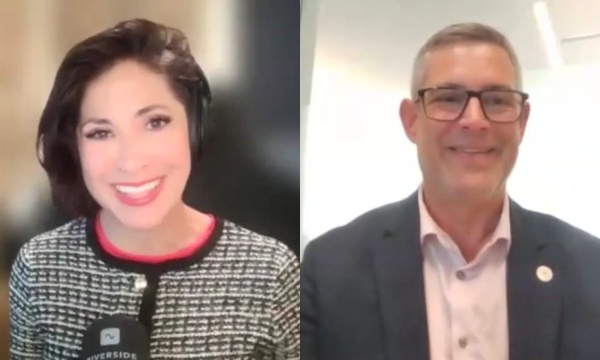
This podcast is for city communications, teams and video professionals in government. We talk about expanding service delivery with video and streaming, media accessibility, gear, broadcast and streaming workflows and more. It's all right here on the Government Video Podcast. The Government Video Podcast is brought to you by MediaScribe from Tightrope Media Systems. Tightrope believes accessibility should never be an afterthought. It should be built in from the start. MediaScribe's award-winning captioning and audio descriptions is your end-to-end solution for accessible government video. Visit mediascribe.ai to start your free trial today. Welcome back to the Government Video Podcast where we talk about what it really takes to deliver accessible government media. On this show, we explore the strategies, responsibilities, and real world challenges public agencies face as they work to reduce risk and better serve their communities. I'm Michelle Alimoradi, and I'm your host this week. This past year on the podcast has been largely dedicated to helping local government teams prepare for the digital accessibility compliance deadlines that are coming up in April, 2026, and today's specific topic within that checklist of discussions, if you will, is what changes when an organization knows it's not compliant or knows it's at risk and still doesn't act. And our guest today has seen what happens next up close. Joining us to discuss this today is David Bateman. David is a former due process hearing officer and nationally recognized expert in education law and accessibility compliance. With over 25 years of experience working with public agencies, David advises school districts and government entities on ADA Title II and section 5 0 4 compliance, including digital accessibility and has been directly involved in cases on formal complaints, federal investigations and litigation. David also helps organizations understand how accessibility failures can escalate and what enforcement agencies are looking for and how to respond effectively once legal action begins. So today, David's going to walk us through these real world examples of what other organizations have experienced once accessibility issues were identified and what might have changed the outcome if action had been taken a little sooner. So David, thank you so much for being here today to help us walk through these important details and distinctions. Thanks for the opportunity. I appreciate you guys hosting this and bringing up this very important topic. Yeah. You know, they're really just needs to be a forum for getting into the nitty gritty like this, this is really the type of of question that we get a lot. So I really wanna make sure that we can bring as much insight as possible. I want to start on the legal side of this, not to be alarmist, because you know, but because it frames everything else, right? So in past episodes on GVP, we have said, Hey, listen, you have to start, right? You have to try. It doesn't have to be perfect because it can't be perfect all at once, right? And that still stands. However, yeah. However, right? We have a however, today. David, your experience suggests that once there is a known issue, the rules do change a little bit. And so we wanna get into the specifics of that. So my first question to you is, from what you've seen in federal enforcement actions, what matters the most? Is it the agent's intent or is it what they do after learning the accessibility? So is it like intent versus actual action? What? What have you observed? Yeah. And Michelle, that's a great place to start and before, before I go to the answer, we make sure that just to understand is if you have legal questions, make, please consult, please consult your attorney, to get clarity on this one. But we, we can give you good guidance as a part of this, but we're not, we're not, we're not constituting an attorney-client relationship as a part of our answers here. And, but we are gonna try to give you good stories, at least, and examples that will help you build on this one. But, but basically, so I think what your question's really good, the intent versus the action. Intent only really matters to the up to the point of notice. Before an agency knows about an accessibility barrier, regulators must consider whether the failure was, like, for instance, typically it was an inadvertent. Was it resource driven or is it the result of unclear standards? After that, the, conversation is over. Once knowledge exists, either through a complaint, through an internal report, or even documented staff concerns, intent really does become legally irrelevant. Enforcement bodies stop asking why the barrier exists and start asking basically three questions. Did you know? What did you know and how fast did you do it? At this stage, good faith is not inferred from attitudes or values. It is inferred from behavior. Agencies are evaluated on whether they responded promptly, whether the response was organized rather than, for lack of a better term, ad hoc response, and whether that response showed control of the systems rather than panic or indifference. And there, there's times when there's, indifference that can pose a problem and. Let, let me, let me give you an example. A district had known for years that many of its PDFs were inaccessible. The staff had flagged this issue repeatedly, but leader, leadership and, and, and had treated as a future cleanup project once time and budget allowed was always something that was gonna happen in the future as a part of this. Once the formal complaint was filed, investigators never asked. And truly never asked how the PDFs were created or what tools were used to create them. They focused exclusively on how internal emails showed leadership already knew. They had known this for a long time. The, like a single email thread erased every argument about good intentions. So what we have to think about is, it, the law looks at very much at when you knew, or should have known about what's going on. And so pig piggybacking on that one. So it, the intent versus action and knowledge is, is a vital and very important thing about this one because yeah, there are, there are rule, there are truly, and, and people often complain about this, there are rules that you may not be aware of, but the moment you become aware of those is what were your actions as a result of that. And that's what we have to pay attention to. That's what we have to focus on. And. Does that help? Yeah. No, I think, I think that's a really important distinction. And a really great example too. If there's, if there's written documentation that you know of this issue and, and a lot of time has gone by, that could be a really risky thing. And, and, and and piggyback on what you just said is, is that we live in an email in a, in, in a, a world where so much of our correspondence is done through email. Emails are searchable, little suckers. And we have to think about is that, it goes back to, yeah, you, we, when when do, when were you provided notice on this one? And that's the important thing. And I think another thing that I heard you say, at the beginning was whether or not the standards were clear. And I think that's a thing that we're going to see change in in April, right? When, when the web rule is enforced, the standards are now much more clear than they have been in the past. They're very, um, very well clarified in the WCAG specs. So there will be less gray area there, there will still be gray area, but I feel like there will be a lot less gray area than there has been in the past. The black and white rules are fairly clear, but as we get into the a year or two of interpretation of them, that's when we'll come up with the gray areas. But right now, we all know what we're shooting for. And it's much easier for things like, drive by, you know, lawsuits to happen when there's the black and white. Yeah. Yep. So when accessibility problems don't get fixed, in your experience, where is the process usually breaking down? Like who tends to assume someone else is handling it or how does that go? Well, the process breaks down because, is that. The accessibility to failures pretty much never stem from bad intent. They, they just don't, that's, it's not a bad intent. What they typically stem from, and this is, this is important and why I, I appreciate having the opportunity to talk with you about this one. They often stem from lack of better term, I think the term I use is broken handoffs.
For instance, IT assumes communication owns content. Communication assumes that vendors handle the compliance. Leadership assumes that coordination exists somewhere below them. Each assumption fee and each assumption completely feels reasonable, but collectively, they create a system where no one really owns the outcome. Risk accumulates. When the, and probably pretty quietly in these gaps, especially in a decentralized environment where content is created by many people using different tools. I mean, I was working with school district where IT had addressed platform accessibility, platform level accessibility. Which is a vital part of this process. Communications had updated templates and leadership leave the issue was resolved, but individual group program offices continued uploading inaccessible documents weekly. Each group had done part of the job, but no one owned the whole system. And enforcement found that gap immediately. So we have to think about how we need to think about it as a collective and, and it's, everybody needs to be on board for this one. Not just, not just the IT folks, not just the communication people. It, this is all, this is a whole system accountable thing that we need to pay attention to. Have you seen folks fix that successfully? And what did they, what did they do? What was involved? I have, and what I've seen is I've seen people work on this one, is the problem is, and this kind of goes back to the original question, is that the, again, it goes back to, knowledge. I've seen people try to address this, and fix it in and one of the, one of the problems I often see is, people thinking that they, they've solved it, but they've solved it on one, they, they've solved it for one day. This is the, and, and, and if everything seems to be, but then there's someone who loads who's going to load inaccessible documents 'cause we haven't, or, or they, they put a, a parent facing webpage out there that is inaccessible to individuals with visual impairments, but they, but it has all these great, wonderful bells and whistles, but a screen reader can't figure out what, what's dashing across the screen at that time. So it poses significant problem. So it, this is, it's not just a one-time fix, this is a, this is a permanent fix. So, I'm not seeing, I'm seeing people thinking about this, but I'm not seeing wholesale adoption like it should. We still have time, but it's, it's, it's, it's for, for places, it's gonna be a work in progress as this. So, so having someone ultimately responsible for the cohesive outcome, right? Of the overall accessibility score, if you will, seems like a good way to go. Or maybe a, maybe a committee of those people. But somebody that's, yeah. I your, your, yeah. I, I, I'm in small districts. I'd appreciate if they had one person, but most places, we need to have multiple people representing different viewpoints on this one. Yeah. And, and to that point, have you noticed like specific roles within an organization that tend to underestimate their connection to accessibility risk? Oh, yes, yes.
The biggest thing that I'm seeing is, is people overestimate or under, or under insuring what's going on. And the big problem I'm seeing is accessibility falls most often in the space between authority and accountability.
Like vendor contracts include accessibility clauses that are never enforced. It fixes systems but not content.
Communication publishes, but does not verify. And leadership just makes an assumption that compliance without asking how it's being monitored.
And so we have to think about this when I make sure that we're actually checking and evaluating act whether this is actually occurring, and ensuring that this is, this is a consistent part of what we're doing. What do you think that leaders in the education space where you've been working mostly. What do you think surprised leadership the most when they realized like accessibility wasn't just a technical issue, but an organizational one? Like what, what have been the, the bigger surprises that have come up? Basically people who underestimate their risks. Hmm. Um, I mean, for lack of a better term, communication teams see themselves as publishers. They're not, they're, they're, they're not risk owners about this one.
Program offices think accessibility is tech is a tech, is a technical thing. And it doesn't affect what they do.
And the other thing is leadership. This is, is, and I don't, I don't, I don't mean to pick on leader leadership, but I'm going to, is that, is that they don't often they, they, they're, 'cause there's so much that's going on school, K 12 education, there's a lot going on and there's a lot of changes happening. There's, for lack of a term the mishegas of what's going on in Washington. But leadership frames what we're talking about as, as an operational thing rather than a legal thing. And we need to talk about it as a legal obligation to ensure that individuals who have disabilities at often at no fault of their own, can adequately participate in what we're doing in schools. And that's what we have to think about this one. And, and this, and what I, where I'm seeing is, I'm seeing is risk often originates with the people least aware that they are creating it. And that pose, that poses a problem. Is that, is that, yes, we could. I'm betting, that there, there are leaders out there that are aware of what their obligations are. Or what they're, but, but it's, but not everyone in the agencies are aware of these things, and because their lack of awareness, they're not, they're unsure of what they, they're just doing the same thing that they've been doing in the past, and they're not making changes as a result of this. And that poses a problem. Hey, if you're enjoying this podcast, you might also like our webinars. We host live sessions where we dig deeper into topics that matter to media makers and government, like accessibility, compliance, automation, all of it. Join us live to ask questions or browse our on demand library whenever it fits your schedule, click in the link in the show notes to check out what's available. So once an accessibility issue is identified, what would you say? What would you advise? Again, we're not giving legal advice. Just process. What are the first practical steps that you think an organization should take to avoid drifting into inaction. I would come up with hard and fast deadlines with an evaluative well, a way of evaluating whether you've met those deadlines. Because what I'm, what I see a lot in education is we we're really good at writing goals. We are really good at this, but we don't then come and make, make any clear determinations, yes or no. Have we attained those goals and, and whether we've actually done what is necessary to be a part of that process.
So what we have to make sure is that, is we identify the barriers that require action now, and, because one of the things we'll often, we'll often see is I see, I see districts who will say, is that, we'll, we'll get, we'll fix this in the redesign. Or we'll do this down the road, you need to make sure that we're talking about this one. 'Cause I, I worked really closely with a school district that had a complaint. An OCR complaint was OCR, may, maybe it was DOJ, but they, they had a complaint. And because they, what they had was not accessible for individuals who were blind, were visually impaired. And they said, we're gonna fix it. We're gonna fix it in the redesign. And they, they we're gonna fix this in the redesign. And so they, they spent the next 18 months doing a great job at the end of those 18 months fixing what they did. But during those 18 months, individuals were blind or locked out of essential services. And so, and so what we have to think about is what is the interim access that was offered during those times, or what were, what are we doing to provide this? Again, the, the, it goes back to the original question, which I thought was a great way to start, is what did you do the moment you found out that there was a problem? Did you come up a, an alternative solution or provide assistance to someone or offer, offer to make changes? What, what, what, what did you do as a part of this? And that's, that's the vital part of the process. What did we do with that? Do you have examples of organizations you've worked with where they have implemented something right away that helped like some sort of effective interim solution? Yes, yes. I'm working with a district, because we have to think about this when the first response, and I mean this with, and this if, if people learn nothing else from this, that this is the one thing that I want people to learn. Don't go away, stay for this because there's gonna be good content after this. Is that, is that the first response matters more than the final fix. And when I, when I say that is, it shows first good faith, but it also things like this. I'm working with an agency that acknowledged the issue immediately. It was an issue related to visual impairments and the screen readers. It was kindergarten teacher who had this great, beautiful website with all these things dashing and dancing and things. Probably kindergarten kids loved it. But there were some parents who could not access the content, and there was a kid who was, the guardian was her, was her grandmother who, first had some issues just with webpages in general, but couldn't participate. Okay. But what they, what that district did is they basically said, made sure that everything that was available on that website that day was available as a printed copy for that parent to look at. And in large, and large print is a part of this one, okay? And make sure that it was of all, everything was there for that and they made sure the parent, that grandparent was available part of this one. The speed, the clarity with which they embraced that. Reduced. Yes. There were still there. No dispute. There was not a problem. But what they did is they said, what works for this person? We're gonna, we're in the interim while we change things, we're gonna make sure that you have full access. And from that, it was, it was like, what there, the, it, it happened, I remember it happened on a Thursday and by Monday they were printing stuff out for that parent. Grandparent. And the good faith that was put into that was vital. So when I said the first response matters more than the final fix, the good faith to make sure that, that that grandparent could participate. They, they, they named it, And they checked on that every single week to make sure things were happening and what was going, I prodded them on that one, but they post made, they made sure what was going on and, and they, they basically, when I've talked to people who evaluate this, they looked at that response as a model. And even though the, even though the system was not fixed, oh no, not fixed at any stretch of the imagination, but there was a way for the person to participate based on that initial complaint and go from there. So you, you can, you can turn risk into action really quickly to address this. So does that, that help answer your question a little bit? Yes. I love that example because I think particularly as we're looking at this web rule enforcement, there can be a lot of folks out there who really are looking at the big picture. They understand that there's gonna be all these inter departmental handoffs, and they, they are seeing this as, you know, an organizational change. Within that, they're getting probably very intimidated. It feels very daunting because they're like, how can we change this quickly? You know, how can we respond quickly in the interim? And something as simple as printing out some content is very doable, right? For most yeah. Right, and, and go, go, go to where the person is Okay. And not where you think they are or what you think is best for them. Go to what they are, work with them very closely and just pretty much just immediately of the, the term I often use when I work with school districts is fall in your sword. Say what? Just. Tell us what, what, tell us what we can do so that you can participate. We will be fixing this, we'll make this better. But right now, in the interim, we're gonna make sure that you can participate, you can participate fully, and that's what we need to make sure that we have an opportunity for this. And it changed, and what I, what I did is I applaud that superintendent and, and I applaud their, I applaud their initiative because they could, they could have just said it was just one parent in a whole elementary school. We're gonna spend all of our time on this one parent. Yeah, you are because that parent, that parent wants to participate, that actually grandparent wants to participate in their, that their, their grandkids education as their guardian. And we need to do our level best to make sure that they're participating. So, And, and how far does it go for an organization to simply have a place where the special needs can be requested? Well. We often under underestimate our risks. And what we have to think about is,
the rules and opportunities for people to participate. This is not an optional rule. This is not just something that's a, that's a nice thing that we're doing because increasingly and rightly so is that we are, we are looking at district webpages as the, as the form of communication, the official form of communication for with, with and for parents as a part of this. And since this is the official form of communication with and for parents, we need to think about it. It's not, it's not an optional thing. This is something that benefits everyone as a part of this one because yes, this is the one grandparent who complained. An example I gave you a few minutes ago, but there were others who then found out. There was a, there was an individual who was having trouble with the internet access. So they later, about three weeks later, found, they found out that they couldn't access it because their internet was unstable. They couldn't participate on a regular basis because increasingly parents are participating through these, not through computers, but on their phones, and they, they were having trouble with that. So they printed something out, they printed another copy for them and allowed others to participate. So what benefits one would also benefit others is a part of this one. And the rules, all the rules that we're putting in forth, they're gonna benefit people down the road in ways that we can't imagine that they're gonna need to participate. Well, and what I'm hearing is on the flip side of that, what happened was one person felt empowered to speak out for their needs that weren't being met, and then that. That escalated. Right. And a bunch of other people realized, oh, I can do that too. And that could happen for any organization that that isn't already lining themselves up to follow these rules right? Is that once you get one complaint, you could start to see multiple. Well. or request, I mean, it could start as a request, right. But then it could very quickly become a complaint if you know about it and you don't take action. Yeah. And it, and it wasn't the parent. The parent was, the grandparent was not looking for a thing. Mm-hmm. Is the grandparent missed a notice that was put on the webpage relating to a field trip, and therefore the kid was going to be missing a field trip as a result of this. And it wasn't. The grandparent wasn't looking for a way to how, what's going on, what's happening, anything like this. She just wanted her grandchild to be able to participate and have an opportunity so that there, the child was, was not having any stigma, relating to the fact that it was a grandparent raising the issue. Mm-hmm. And so that, that was there, it was, it was an, it was an innocent, innocent request on her part based on what a teacher thought that everyone had access to, and that's where it started from. So most of these things are very innocent. It's not like people are trolling on the whole trolling these websites looking for damages or looking for things that are wrong. It's because people are just truly wanting to participate in their kids' lives. And, and as we translate that to government, we can see how there'd be many other crucial examples of folks not being able to access services or participate, if these, if the compliance is not met. Correct. Right. So I, I really love these examples. I think it really helps people understand, you know, what's at stake. Not just with legal risk, but also with with service delivery. Well said, well said is service delivery and it's just, and it, it, and, and what and what we, what these rules are, are rules that will benefit people with learning or reading or vision or hearing issues and ways and examples that, that if you and I were to lock ourselves in a room, we would not come up with all the problems that they have. And what we're gonna provide is opportunities for people to participate. And that's truly what we want, is we want people to have an unfettered opportunity to participate without, without having to do other things because the world is tough enough for them as it is. Exactly. Well, I think this has all been, very enlightening, David. This conversation really highlights how much changes when an organization knows that there is a problem and how important those next steps are. Yes. David Bateman, you could be reached at specialedconsultant.org, which we will have available in our show notes and in our transcripts. And, Thank you so much for joining us. I know we'll be working with you again in the future, so we'll have ways for our listeners to connect. Thanks everyone again for joining us for this episode of the Government Video Podcast. If you found this conversation valuable, please like, subscribe, and share it with a colleague who you think will find it useful. I'm your host, Michelle Alimoradi. Thanks so much for listening and we'll see you next time on the Government Video Podcast.