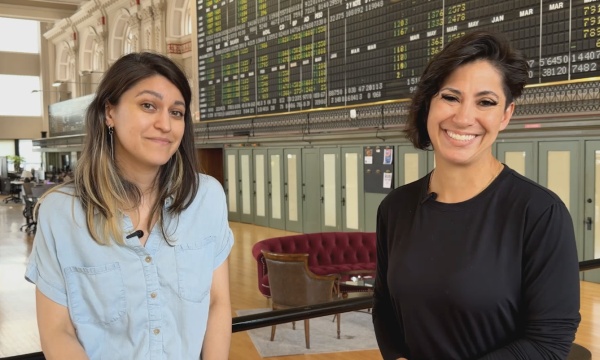
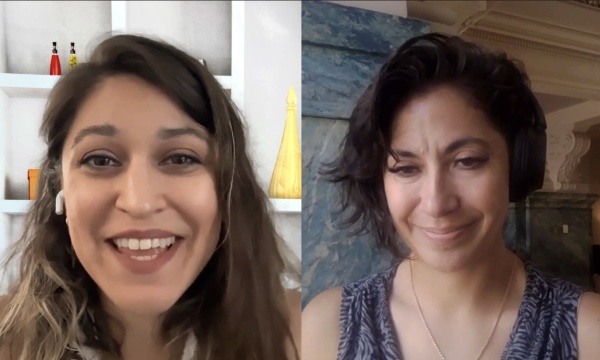
This podcast is for city communications, teams and video professionals in government. We talk about expanding service delivery with video and streaming, media accessibility, gear, broadcast and streaming workflows and more. It's all right here on the Government Video Podcast. The Government Video Podcast is brought to you by MediaScribe from Tightrope Media Systems. Tightrope believes accessibility should never be an afterthought. It should be built in from the start. MediaScribe's award-winning captioning and audio descriptions is your end-to-end solution for accessible government video. Visit mediascribe.ai to start your free trial today. Hello and welcome back to the Government Video Podcast. I'm Michelle Alimoradi, and today I am here with the CEO and the CTO of Tightrope Media Systems, JJ Parker and Ray Tiley, respectively. Hello. And Tightrope is the maker of MediaScribe, which is a suite of accessibility products aimed specifically at helping government teams with video compliance. Yep. Right, right. And we just wanted to talk to you guys about the product, your journey, how you got into this space, and what makes MediaScribe different in the accessibility space. So I wanted to start first with, a little bit about you guys. JJ let's start with you. How did, how did you get into this space? What was your journey from there to here? Well, I started in public access, or actually more specifically the education access part of our TV channel in the town I grew up in Bloomington, Minnesota. I started volunteering there when I was in seventh grade, so I kind of grew up a little whipper snapper. Yep. I kind of grew up doing sporting events, concerts, the school district stuff. And then I started working for the City of Bloomington, doing city council meetings, planning commission meetings. Yeah, just doing all the video stuff with the city. And through that experience is when we started Tightrope. We made our first automation products Cablecast, to help automate the functions of those PEG stations, right? Cablecast is a playout automation product for both cable casting , in the name and streaming. Right. Right? And one of the fundamental things about Cablecast, like one of its kind of foundational things is that our mantra is let computers do what computers do and let humans do what humans do. So like, let's figure out how we can like, put information into the system once and how like have it get everywhere, have the computers start automating things so we don't have to have a lot of staff time, big staff burden on doing, you know, scheduling things that frankly the computer's better at. So that's kinda like the foundational part of that Cablecast product that's kind of flowed into like our accessibility products. Which is funny because like automation's everywhere now, right? It was mostly in spaces like broadcast back then, so it was very cutting edge. Well, back in my day we were automating VCR Playbacks. Right? Didn't, it was analog. Not dig myself, but yeah, the automation was pushing a play button. Yeah. And Ray you had kind of a similar story from there to here, but yeah, so, uh, didn't start maybe as early, Well, I've always been a video nerd. And then, I was a wedding videographer in high school and college. And then when I transferred to school in Maine, I got a job at the local access station doing computer stuff and programming the Cablecast systems. That's sort of how I got into it. And then I started helping people build specifically Drupal websites, I believe using the Cablecast APIs. I was, that's how we met, was in the Drupal space. Yeah, I was very online, and on the forums. I think I started helping solve more support tickets than the Cablecast support team at the time. And so eventually, they decided to just start giving me money for what I was doing. So I had to hire you. Yeah. Your job interview was lurking on our forums and then here you go. Yeah. So, and then, just, kind of went from there. And so both of you came from this, well, not even, I was gonna say government adjacent, but you were actually working for the city. No, I was in government. I mean, yeah. I spent I don't know, thousands of hours watching City Council meetings. And so the product development was really about developing the things that you were using on a day-to-day basis, right? Yeah. It was like, we're working in this space. There's not any purpose built tools that quite do what we need with our specific needs. So like, I'm just gonna make the thing that I wanna use, and other people wanted to use that too. 28 years later, here we are. Yeah. And now in the, in the last few years, there's been a development, it actually started in the Cablecast product and now we've got a whole new spinoff of MediaScribe in this accessibility space. And, we're already coming from these values of like public service, right? Serving the community, making sure this media, this very critical media in many cases, is available to as many people as possible. Yeah. One of the things that I like always struck me, you know, when I was doing city council meetings was just how direct that, you know, form of government is, right? Local is the, the most direct form of government, right? So I was like, you had people coming in off the street, they'd get in the podium, they'd talk to the, the council members, the thing would get decided and off they went in. I really liked, you know, how kind of transparent that was, how just right on ground level that kind of government was. But the thing that really struck me most about it is you know, every week it was different citizens in there. You know, like, never did I see the same citizen in, they're like, couple weeks in a row. Well, maybe if I did that was a problem. But, there's just that one person, you know, there's. It, it was just like, oh, the whole community is engaging in this activity in various ways and there's just a whole variety of different people. So I really like, it kind of really struck me about that environment, about, how do we make sure that we can reach this whole variety of people that live in this city and how do they work together and then grow this this community together. And you've really been there ushering this change from it being more critical to actually participate in person, to bringing that same content to people where they can watch it on their phone, on their commute to work. And so what have we seen in the last few years that has enabled this now additional layer of digital access? Yeah. Well, that's what I was gonna say is, since I grew up in access, the key word is access. Right. Like, access has changed. It used to be cable tv, but now access is a lot different. It's internet delivery, it's phones, it's a variety of different mediums ,right? So we need to make sure that we can get that information to a variety of mediums and in a variety of different ways, right? Not only video, but audio and text and different languages, and, and we can leverage the tools that we have today to reach all of those people in the form that they want to receive that information in. Yeah, there's a tremendous opportunity there. And then there's also some external like regulatory pressures that have come along too to help everybody kind of I feel like there's always been a sense of, we want, we don't wanna exclude anyone right? But we need clarity, especially if it's not our specialty to understand what we need to do to increase accessibility to people with special needs, right? So it's not just about internet access anymore cable access, it's additional needs and features within those platforms. Yep. And what ray's really brought to our team is this, I, this like drive towards creating technology that allows people to consume media in a variety of ways. So, you know, a few years ago, you know, Ray was like, Hey, we gotta you know, add closed captioning, we should add this, we should add this. And, yeah, I'll let him speak for it. But it was kind of like from a business perspective, like, eh, and then, but Ray was like, no, you guys. It's the, it's the right thing to do, so we're gonna start doing it because it's the right thing to do, not because we have to do it or it's regulatory yet. And that was one of like the driving things behind this product. So I, I can't even own that, 'cause there's actually a famous investor call with Tim Cook on it where he was getting pushback from an investor about adding accessibility features to like the iPhone. And he said, we don't add accessibility features because it's profitable. We do it because it's the right expletive thing to do. And that story always really struck with me. I found it really powerful. Well, and I think you also were seeing other signs from the customers we serve too. I think there, I mean, there's, there's always like, you know, the early, the early customer adopters. I think what's interesting, especially with the web technology and the push with accessibility is the way just web standards work in general? I think a lot of people don't realize that people think things like the, WCAG just come from this like magical space. But they're actually just like regular people working at regular jobs that see a need for this thing and they join the committees and they participate in the standards building process and they put in a lot of extra time and they form these standards. But they're just regular engineers usually. And they go to conferences. I go to the same conferences. So typically those things that are happening that then get pushed into like the laws and the regulations they're being talked about way earlier at like developer conferences. So I think I definitely saw this talk by someone that was on the WCAG standards body. And I think it was someone from Microsoft, they have a really good they call it an inclusive design. And the thing with accessibility principles is, they don't just benefit the person with the disability. Doing stuff that for people with who are blind also helps people say like, who just had cataract surgery? Or someone who forgot their glasses. So like those types of accessibility features actually just make a product way more inclusive for everyone. And you can see that with like the amount of people who watch videos on a subway now with closed captioning turned on. Right. So like it's just those types of things just make products better for everyone. Yeah. We call that like the curb cut effect, right? When streets were first made, the curbs were all one level and you had to step down every time. Once the physical accessibility stuff came in and said, Hey, no, you have a little, a little ramp. That's great for everybody. Yeah. Now, now someone with a stroller, pushing a baby can easily get up that sidewalk. Right. And and I like that you mentioned, Ray, that the stuff is not new because the WCAG has been around for, what, 20 or 30 years, around the nineties. It's, it's been a while. Uh, yeah. It's, and it's an international. It's an international standard. Yeah. So there's a lot of people around the world that are familiar with this. And the reason we're just now hearing about it, I think in large part is due to these new technology opportunities with AI, right? Because it now we have the ability to achieve a lot of this stuff so fast. Right? And I saw, I saw you taking advantage of that as early as possible for our industry as well. Sure. What was that process like? Like what, what problems did you have to solve? A of how long did it take you to get there? A lot of experimentation, I mean. By the time someone's watching this podcast and listening to me talk about this, whatever I'm saying will be out of date. Like the technology around AI is just moving that fast. But certain aspects of it, like machine learning actually isn't that new of a, of a technology. We've been using machine learning for a while now. It's just the, the increases in computers and their processing abilities and have just made the advances and the scaling of it and the rate at which it's improving just so much better. But what I would say is that it's getting so good, but it still needs people, like you still need a person to evaluate it. Like it's, there's still like a human aspect that has to be a part of it. So I think my like, experience with it is just playing with it, learning it, and then just keeping an open mind about it. There's like a podcast I listen to and they talk about, like, there's two schools of thought on AI right now. There's the, what they call the east coast thought of like what AI can't do. And then there's the west coast, like California, San Francisco vibe of, what can AI do? Like it can do everything. And then there's the people that are like, it can't do this. It gets that wrong. And, I like to meet in the middle. Like it's a really powerful tool, but that tool needs to be applied correctly in order to get the best results. What has been a thing in the last, two years that you've really been working heavily on this, that you were surprised by or pleased by in the development? So in what we're working on right now with the audio descriptions, in particular, the advances in the vision recognition capabilities of the models, again, machine learning is not new. Things like, open cv, kind of a technical thing. We've been able to like, identify pictures of cats in photos for a very long time though. But the newer generation of models, the first time I ran a, a clip, a video through it and got like this description of a meeting happening, I was blown away about like how, how accurate it could be. Yeah. Right. And what that's enabling now is like native, interpretation of video, right? We don't have to translate the video into something else and then work on describing it. Now we can just take that video and just directly say what's happening in a much faster time turnaround. Right? Yeah. I mean, under the hood, you're, you're still, you're still turning the video into images, for the AI model or most models, most like commercial models, but just the speed at which you can do it and then get something again for a human to kind of review and validate. 'cause again, it's AI, it makes mistakes, so does humans. But it just allows you to get to something that is useful for someone with an impairment, so much faster and more cost effectively. That it makes providing those services so much more attainable. Right. That, that's the thing that like blew me away with it was the tech is super cool and to watch it work is super cool. But the cost model on the whole thing, like it's expensive to have people watch a whole city council meeting and do audio descriptions on it. Like really expensive, like prohibitively expensive. But with this new tech, we're able to actually lower the cost to such a point where we can provide it for all of the city council meetings, right? So to me, like the, the cost model change is a super impactful thing, and that was my wow, wow moment. Like, whoa, we can actually deliver this for all of the content, not just like the one or two pieces of content. Well, the high profile content. That used to be the challenge, right? Right. You get a lot of stations of like, we really wanna offer this, but cost prohibitive. We have to pick the most important. What we think is the most important or, or what's the most popular meetings or content that we're putting out and, and prioritize that. And there was like a little, there's a little chicken in the egg thing happening right now because like the legislation's gonna go in place that requires audio descriptions. Yet, like, until very, very recently, it was cost prohibitive to do. So like, what were, what were municipalities supposed to do? Either break this law or spend money they don't have on a thing complying with the law. So industries kind of responded. Hey, quick question, are you heading to NAB this year? If so, we'd love to meet up. We're Tightrope Media Systems, the producer of this podcast. We make tools to help media makers in government work smarter. Video accessibility and compliance with MediaScribe, as well as broadcast automation with Cablecast. If any of that sounds relevant to what you're working on, let's grab some time and chat while we're both in Vegas. Click on the link in the show notes to book a meeting with us and we'll see you at NAB. So up until now we've been, you know, kind of philosophical, kind in the architecture space. So let's bring it back down because you mentioned cost and cost structure. So now we're in this space where this technology exists. It's much cheaper. It's much faster. You can deliver things in almost real time. And when we say things like specific to video compliance, we're talking about the transcription that feeds captioning, translation. We're talking about, this native video interpretation enabling things like AI audio descriptions. So now that, all that thing, now all of that is possible and there are other people out there working on it just as much as Tightrope is. What are you guys bringing to the product as people who have worked in this education space and this government space, who really value accessible civic content? Yeah. Well, what are you bringing to it? I think that one of the things, like the big thing that we're kind of bringing in with the MediaScribe product is like a purpose built tool for governments. There's lots of generic tools out there with kind of generic workflows that that can get a job done. But what I love is when the right customer uses our product and is like, oh my God, you made this for me. Like, you made this for just me. Like it's perfect. Right. That's the moment I love as like a product designer is when the customer thinks we made it just for them. Yeah. Right. So that's what we're trying to do for all of our government customers, what we want them to do is like, oh my God, you made this for me. It uses all the word to, uses all my workflows. It is just like it fits so naturally with what I do. I don't even think about it. That's what we, that's, that's our goal for the product. Public content, government content has a different set of constraints and, and goals and purposes than other markets. It's not, it's not like, it's not Netflix original content that is, you know, trying to be ad supported or, you know, it's, and it's long, sometimes hours, hours long. Some of these meetings that I have to go through our process are eight hours, like some tools just can't handle videos that big. So, yeah, so when, when you've got tools that help, maybe AI accelerate audio descriptions for a 30-second ad versus an eight hour council meeting, like those are just completely different problems. Yeah. Well, and let's, you've mentioned machine learning and now with audio descriptions there's also some generative
technology involved. To what degree do we now have to have purpose built prompting available in different industries? Yeah. So if you played around with these tools, the prompts are very important. So like in the MediaScribe tool set, like we're tailoring the prompts and we're making them very specific for kind of accuracy and,
to deliver accurate and kind of neutral tone for these types of audio descriptions. I'm not sure if that's exactly what you're asking. Yeah. I think we want to keep in mind what the content is. Yeah. Right? Yeah. And maybe like to, to elaborate on that is like, just like if a human was doing it, it needs context. AI needs the right context in order to generate the right things, like if I just gave you a piece of content without any context, you can make something up, but like, it's probably not gonna be right. Same with the AI. So we've built the MediaScribe pipeline to make sure that it is feeding the context into the AI models, right? And tuned for this kind of content. Yeah. I mean, and that's very important that it's like that, that it is tuned for the right content. Yeah. Outta the gate. Like the, the product is just designed for government meetings. So it's, it's, the whole system is just focused around that. So that's from the get go, that's its context. So. And what about, what about user experience and like the staff that you expect to be using this product? How did that come into play in your design? So, I mean, typically every, every government, every station is different. We try to design the products for a non-technical, non-video expert because a lot of times the people who are doing these things are wearing multiple hats. We want to make it so that, you know, the, the thing we throw around the development team is we wanna make it so that the city clerk can just hit a button and know that it's going and fine and walk away from it because they have a lot of other things on their plate to like run a meeting. And we're doing the same thing with the, the audio descriptive problems. Yeah. And I also wanna just talk about
input, right. And, and mission, because I think a lot of leaders in the audio description, captioning spaces are very large. They service a lot of industries, like you mentioned. They're, they're kind of generic because they, they wanna catch, they wanna be a catchall. And while they might be great tools, how is Tightrope different in terms of its approach to development and like, we're not adherent to shareholders in our case. Right? Yeah. So what are you guys using as like your guidepost here? I'm adherent to him. Well, I mean, again, I think it goes back to that customer focus that we have Right? Like, a strategy we could employ would be let's go get as many customers across as many industries as possible who need descriptive audio services. Right? Or transcription services. Like we could do that, but. Again, I personally don't feel that that makes the best product for the customers. I feel like, I feel like that makes watered down Kool-Aid and that no one likes watered down Kool-Aid. Right? I want the tastiest Kool-Aid we can make. So, just in my experience of building software products over the past few decades, I prefer and I know that like when we make the right tool for the right person, it's amazing. So. Yeah, that's what, that's our company philosophy and that's what we focus on. And what has been sort of the approach to relationships at Tightrope with the people that we're serving? Like we, I'd say we are, we are extremely close with our customers. Like, you know, many of our customers have my cell phone number. Yeah. Have Ray's, cell phone number. We've got, we invite them into our internal chat tools. So like our champion customers are right in and can, can speak directly with our engineering and product teams. I mean, we are, we are probably unusually close to our customers and we wanna be, we want to, we want to know their challenges and their feedback and work with them on making the product better. So what are we, what are we gonna see from Tightrope. What, what should we be looking out for? I know we've got NAB coming up. Wait, are you fishing for some, like what next feature things, Michelle, do we do that? The tea and I mean tech,
what can folks who are watching, what Tightrope is doing, what can we be looking out for? Well, I would say, obivously like our MediaScribe live transcription and translation stuff has been out for a while. We're in the process of releasing our audio description product, which allows people to just upload a video file that processes it, brings it back down to them as, with audio descriptions with a human in the loop capability. So again, like Ray was saying, we can make sure like it's doing all the things right. I like to call that like, like AI accelerated audio descriptions because we still do want someone to double, double check it. And then from there, just like expanding the video, accessible video delivery because, still when you go to websites, when you go to different, streaming services, are the transcriptions there? Are they in all the languages? Is it voice synthesized? Can we select those, you know, those different like voice narration, like it's, it's a little bit, it's not super standardized out there in the world yet. And so I think we hope to do is like continue to help cities be able to deliver all of that content and all of those different varieties in a very consistent way. So we've talked a lot about the tech and you mentioned like other ways in which the product is catered specifically to this government space. So as we, as we close out, I just wanna talk a little bit about implementation, right? This deadline for the web rule enforcement's coming up very soon. It's like a hundred ish days. I'm not gonna give an exact day because I don't know exactly when we're finish gonna post this podcast, but it's coming up in April, and so. Folks are, folks know that they're under the gun, right? They're coming up with plans. They're trying to figure out what's the timeline, what are the next steps? What is it like to implement a solution like MediaScribe? Like, how long does that take? What's the planning look like if they're trying to get there. We, I some of our, some of our MediaScribe Live customers that do live transcription and translation, like for their live meetings, I mean, they can implement that, you know, in as few as a couple hours, right? But, we've really designed that product to be super plug and play. It does come with like a gateway appliance that goes on site that takes in your SDI video signals that you probably already have wired into your council chambers 'cause you're already doing the television broadcast can just take that in and then very quickly it can start doing the transcription and translation. So you gotta savvy it person or, or a tell your, your, your television production folks can wire that in very quickly. Audio descriptions is literally an online service. You just go sign up for an account right now, get free trial hours, upload your meetings to it, it'll process it and, and be available in a few hours. You can decide right then and there that's, that's right, the solution for you. So we try to make it really easy to implement because, you know, we know the deadline's coming up. And again, we wanted to build a product that's like really easy to get into your current workflow. So it's easy because we designed it to fit in with the workflow you already have. What would you want to leave folks with who are, who are in the thick of it right now? Like they're, they're auditing their stuff. They're, or they're at the process of like examining solutions, tools. What, what do you leave these folks with to help them feel encouraged, not overwhelmed in this process. How do we, how do we bring people some sense of balance or control as they're moving through this? Well, like we've talked about, Ray's been living in WCAG and different spec things for a really long time. Yeah. So, like, you really know it right. And, I mean, as any, as much as anyone can know, a 2000 page document. Yeah. But for a lot of us, it's like, I look at some, I look at the 2000 page document, I'm like, oh my God. Like, how do I even, well, how do I even know how to start on this thing? Right. But you have, you've done a lot of it actually. Yeah. So I, I had to go do like my own process of figuring out like, okay, how do all of these specs and rules and rulings and legislation and new laws, like how do they apply? And obviously we scope it to video accessibility, right? How does it, how do these apply to the video that we have? And so like we made a bunch of great resources on mediascribe.ai, our website, that outline like which of the legislations rules and specs apply to video and how do you apply those things. So using some of those resources is a great place to start. And you know, like I tell my team a lot of times it's like, just start, just do one little step at a time. You know, research those documents, figure out what applies, figure out what you're doing now and just start building upon it. There's a lot of things that like with some of the legislation that like if you're showing forward movement and intent right, towards satisfying these, you don't have to satisfy them maybe on the day. But as long as we're making progress towards it, good faith effort, that's really helpful. Right. And you can keep iterating, right? Yep. Better. It is an iterative process. Yeah. Better. Yeah. I would also just say that, you know, don't be siloed, like, make sure you're communicating with other people in your org, 'cause this isn't just. One little department, like you might just be focusing on the video, but you know, your web people might already have a big project underway. Your marketing team might have something underway. So just talk with other people in your org about what they're doing. Yep. And make sure you're all working together. And depending on your, this, your size right. You might have a ADA coordinator on staff. You know, that person's probably the go-to person in a smaller municipality. So some of this might land literally on like the TV production folks, you know? Right. Or the city clerk. Or the city manager. Right. Like, so yeah, like I said, like figuring out what, what your accessibility team looks like. Yep. And then just making sure that you're being mindful of specifically the video stuff. 'Cause it can be really easy to just go like, is the website compliant? Is the contrast right? Is like the titles right? Okay. We're compliant. Well. Right. This stuff goes beyond just the words on video can often be an afterthought in that process. Totally. The last thing, and 'cause I've, I've had a few people breathe a sigh of relief when, I explain this to them is that you, you don't have to make your entire back catalog compliant. As long as it's kind of in an area of like historical past reference. You just need to start making accessible content by the deadline going forward. You don't have to like, add stuff to your entire back catalog. So, tht can be a big help and make the, the task seem less daunting. Less daunting. So having like the plan and the tools. To start making a compliant video moving forward. Yep. Can be the focus as opposed to like remediating your entire Yeah, exactly. back catalog, yeah Don't, don't boil the ocean. Right. And there are some rules about like how far back you, you should go. Like it's in the documents. And that like we've also got some like, facilities for helping customers do some of their back catalog, but like Ray said. It's not gonna be everything back in, you know, like 1977 when you first started recording meetings. Yeah. There's resources on the MediaScribe website. There's also plenty of other Government Video Podcast episodes where we've gotten really deep into different aspects of accessibility planning, auditing, you know, accessibility as a design, you know? As opposed to retrofitting. So there's all kinds of content that folks can listen back to, if you're just discovering this podcast today, that goes into, almost unlimited detail, this process, too much detail, in this process. Well thank you so much JJ and Ray for coming on the podcast today. It's always great to hear like the story behind the tool, right? Because, there's a lot of different tools out there and sometimes it really comes down to that additional context that helps you figure out what's gonna get you from, from A to B in, in this, what can feel like a daunting time, a daunting process. Thanks, Michelle.