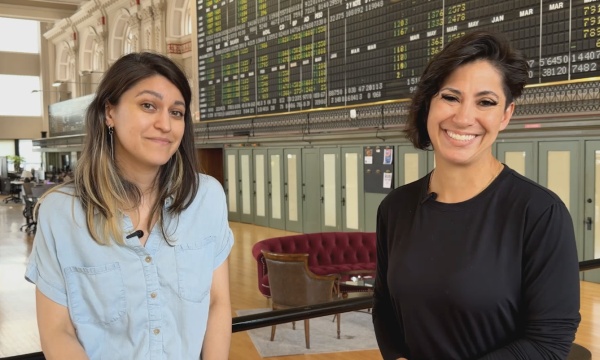
These voting systems for council meetings and board meetings, they've really come a long way from the manual processes that they used to use to the digital solutions. You know, you have people that raise their hands. You have some cities that will literally say the name of every board member, and that board member says how they vote. You have quite a few that still do it this way, which, of course, is time consuming. The other most common way in the past, I like to call the I can't believe that exists. I'd see a lot of cities with, like, this wood board on a wall Wow. With little lights on it. I wanted to start, like, a museum of look at all these things because a lot of them were custom made. Like, cities were having people make these things. And That does belong in a museum. This podcast is for city communications teams and video professionals in government. We talk about expanding service delivery with video and streaming, media accessibility, gear, broadcast and streaming workflows, and more. It's all right here on the Government Video Podcast. Welcome to the Government Video Podcast where we explore how local governments can leverage technology to improve efficiency, service delivery, and citizen engagement. I'm Michelle Alimurati, and I'm your host this week. In today's episode, we're thrilled to have AJ Thompson with us, who is the CEO and cofounder of Cloud Driven Solutions. AJ AJ brings over twenty years of experience in web development and audio video technology to provide cutting edge software as a service or SaaS platforms that are tailored to the needs of public organizations, and that means entities such as cities, counties, and special districts. Specifically, CDS is the maker of AgendaLink, an agenda and meeting management platform which includes the ability to simplify voting during city council meetings and board meetings for any governing body. AgendaLink is the only platform that fully integrates with your AV setup while also displaying meeting info, motions, voting results, and timers, all through a web page that you can use on in room displays or on your broadcast and streaming platforms. With governments facing the challenge of modernizing their operations, we ask, how could technology address the current problems, and what questions should city leaders be asking to ensure success? AJ, today, I wanna dive into the evolution of voting systems for local government meetings, the benefits of utilizing the cloud for city operations, the importance of customizable software solutions at the local government level, and how crucial it is to have meaningful partnerships between technology providers and government agencies. So let's get into it. First of all, thanks for being here. Of course. Happy to be here. Now that was a lot. Just getting started here. First of all, I wanna start with getting a little bit about your background and what led you to the founding of cloud driven solutions and just being in this space of technology for city governments? Yeah. So I I was in the AB industry for a little over twenty years. During that time, I designed systems. And, I mean, I started as a wire puller all the way up to lead programmer for a lot of companies. And as I worked more and more with cities and school boards and things of that nature, I saw this massive divide because I noticed these cities using some software that they were showing their agenda information. They were motioning. Maybe they were using request to speak and things like that. But then I noticed that that's where it stopped, and none of the information was seamless to public transparency for in the room and the broadcast. And there was no control of the actual AV equipment. So if they were using request to speak, they would still have to go over to a a Crestron touch panel or something like that, control that mic. And there was always, like, three, four screens in front of these these folks using this stuff. Right. And so I set out to solve that problem. And, the the thing that really kicked the company into high gear was COVID. So, obviously, during COVID, you know, their council meetings were very different. And so I created the ability with the cloud to do remote voting. And so everything stayed in sync, and and you had your council members or board members in their houses, and they were still able to interact with the agenda and request to speak and do voting and all those things. And so that's kind of what pushed it, you know, even even more. And then since then, it's just been a whirlwind, and we continue to grow and continue to expand on on what is possible, really kind of redefining the space into what is available to to these governing bodies. And you mentioned voting. These voting systems for council meetings and board meetings, they've really come a long way from the manual processes that they used to use to the digital solutions. Let's talk about that. What has evolved, and what trends have you observed over the years? Well, I mean, there's always this. Right? Like, I Or everyone's raising their hands. Or Yeah. For people who aren't watching the video, AJ is raising his hand. Yeah. Yeah. So yeah. Sorry. We're a podcast thing. So you have people that raise their hands. You have some cities that will literally say the name of every board member, and that board member says how they vote. You have quite a few that still do it this way, which, of course, is time consuming. The the other most common way in the past, I like to call the I can't believe that exists. And I'd see a lot of cities with, like, this wood board on a wall with little lights on it. And then they would have these buttons at the dais, and they would hit a button, and the light would light up on the wood board. Mhmm. And then that is how they showed how they voted. And some companies answer to the modernization was they would take a camera and point it at the wooden board, and that's we there you go. We we're showing voting results. This is this is the digital age. The digital age. We took a camera, and we pointed at a wood board with with lights on it. And and and so, like, they're we replace those fairly often. And every time we do, I'm always like, can I can I take this? I I wanted to start, like, a museum of look at all these things because a lot of them were custom made. Like, cities were having people make these things. And That does belong in a museum. Yes. And and and some of them are quite massive. They're not small things. And and so, really, right, like, it it became very clear to me that public transparency is is an important thing. And so what I did when it came to the voting stuff was figure out a way to make it as transparent as humanly possible where the information's getting delivered with with the information that's needed and in a way where they can use it wherever they want. Right? They can use it on the displays in the room. They can have it injected into their broadcast. Right? That's that's also a key piece is the broadcast side of things. Right? They you need that information in that broadcast. And so and not with a camera pointed at a wooden pegboard. And It's okay. And so yeah. And and so that was that was the the key piece in that voting aspect, and then it really became, okay. Well, then how do I take all the other aspects of how these meetings are running and put it all into the same thing so that all the information is there for how they need them? And that is that is the biggest thing when you look at the modernization is is how to use modern technology to do these things where it's all seamless together as opposed to hands or verbal or all those things that that existed in the past. Right. And I think on that note, let's talk about other questions. When a government is considering an upgrade to their current system, whether that's a wooden board or otherwise, what questions should they be asking, and who are the people that are typically involved in that decision? Is that IT managers, city clerks? All all over the place. Some of it comes directly from council. From the city council. Yeah. A lot of the RFPs that you'll see on the market are coming from city council saying we want digital voting. Now And what does that mean? Voting. Yeah. The term digital voting is a very, very broad term because what you will find is in the AV industry, there are companies that make, air quoting voting systems. Mhmm. Now these are software or a custom built module by an integrator or something like that where it's just, like, canned into the AV system, and it goes nowhere. Right? You can't you can't integrate it with other software providers. You can't nothing happens with the information. It's just like you show a vote, and then it moves on, and all that data's gone and lost. So it lives there in the room in the moment And that's And then it's gone. And A lot of the initiative, they'll say, well, we want digital voting. And so the key piece then is for an integrator, whoever's going out and getting this information, is to understand what is out there on the market, right, and and understand what the needs of the city is. When they say they want digital voting, they don't mean they just want something isolated in its own world and it can't do anything. Right? They they love the fact that it can all be integrated into other things because that then saves them time afterwards. Right? If you have something that's precanned in its own existence, when they're doing their minutes, now you've added extra work on the clerk because now they have to go back and watch the video or they're writing it all down, And and there's all that work to get that information into their minutes where with when you're using a platform solution, it's already there. Right? Like, I voted. It's done all this, and it's ready to go in my minutes. And all the information is there. I don't have to write anything down, have to do any of that stuff. Documented in the moment by the person voting, not even by the clerk. Yeah. Yes. And the other key piece of digital voting is voting is only one piece of that. The motion is the most important. Mhmm. Right? No one on, like, for AV folks don't really understand that aspect. Right? Like, when you're voting on something, there is a motion on the floor. You have someone who's the motioner. You have someone who's the seconder, and there's information about that motion. Mhmm. And that is what tells these board members what they're actually voting on. And voting systems just say, we're voting on on on this item, and then you put a yay, nay, whatever. Like a Roman numeral. No additional information. Yeah. It's like, yeah, we're voting on item three. Yeah. Oh, oh, okay. What are you voting on? And and motions can go down a massive, massive tunnel because you have motions, amended motions, substitute motions. You could end up with five, six motions on the floor at the same time, and they'll be jumping between the motions to vote on different motions, and it is not cut and dry. And so that is a key piece when a a local entity is going out to look for a solution like this is don't go cut and dry because it's just going to create a massive amount of work for you after the fact. And when you combine the motioning and showing that information on the the screen and having all of that, like, now you're at ultimate transparency. And when you say showing it on the screen, you don't just mean for the people observing the meeting. You mean also for the people well, in room, yes. But what I'm getting at is is not just the the people watching the meeting, but also for the actual people voting. Right? They're able to keep track of what the exact language of the motion is, where they're at in terms of amendments and and discussion, and know that they're making the right they're voting on the right thing in the right moment. Right? Yeah. Yeah. Because a lot of times, right, they'll they'll say, I want a motion on this item with this specific wording. Mhmm. And and it's that specific wording that is important on that vote because, right, it's it may be a stipulation to that motion or a condition on it, and they wanna make sure that that information is captured. And when they're voting on something, they can see on their screen exactly the wording because we give the clerk the ability to modify the wording in real time. So, like, they could be like, I motion on this, but stipulation, this changes to this. And they can actually type this changes to this and send it, and then it updates everywhere. And now there's no confusion as to what motion they're voting on, what the information in that motion is. And that's a very powerful thing. Yes. Because I think anyone listening right now who's ever served on a board even, let alone had some background in poll local politics. You can relate to that. Right? I've been a secretary on a board. I've been the person being like, wait. What what was the wording for that motion? What exactly how do we wanna phrase that? And then where are we what are we voting on? Have we Yeah. Have we just finished? Be like, yes, no. Right. So that challenge is real, and it's so important. Right? Because everybody wants to make sure that they have those technicalities accounted for and that they understand what they're voting on, and the public can see that in real time too. So that just makes it all the more important. And then it's not on the city clerk to have to be making those adjustments in real time and and in, like, anxiety panic mode. And you get you get multiple eyes on it. Right? Like, if if there's a motion on the floor and they're changing that wording, all the board members see the wording. The public sees the wording. And the board member can be like, no. No. No. No. No. Not that. This. This is what I wanted to say. And they can change it right then and there and eliminates that after the fact of, well, I kinda wrote it down. What was that wording? And now you got twenty emails going back and forth and all this. Whereas right there in the moment, they can nail it down exactly the way that it should be worded. That's great. And that actually was gonna be my next question was how do these modern systems help us enhance government transparency. And I think another aspect of that is that modernizing these systems and improving transparency also includes this sort of, convenience factor too. Right? Because another thing that you have been working on is the ease of the agenda management aspect of this. So not just documenting the motions, but also helping people follow along with where we're at in the agenda, both in real time if they're watching it live. But also key point that we haven't quite touched on yet is the on demand version. Right? Not everybody can watch these meetings in real time. So let's talk about how these modern solutions help people when they're watching a council meeting on demand. What does that look like? So the the key piece with all of that is right? There's a lot of providers out there, and they all kind of do their thing. And the key piece as an entity is it has to be easy for your citizens. Right? It can't be go here for this, go there for that, click this link to jump over to this page, open it for you to hour long video. Yeah. Right? Yeah. This two hour long video. Yeah. All these things. Right? You don't you don't want that. So we as with a lot of things we do, we set out to solve that problem. And so we basically integrate it all together to make it easy. Right? Like, when you're live, right on the agenda page, a watch button pops up because you're running the meeting with our software. CitizenClix watch, they have the live stream, they have the agenda all right there on their device. They didn't have to search for something or go to YouTube, but then YouTube doesn't have the agenda, and then they gotta open. Now, like, now they're all over the place. Right? One click, you're in. When it comes to the on demand, like, the the beauty of of what we've built with the the cable SaaS system is we know when that on demand asset is ready and the watch button just appears. And so as a citizen, they can go back and that on demand asset is available as soon as it's done converting, and they can click the watch and, boom, they're in. And then And then in this two hour long video, they can skip to exactly what they're looking for. Yep. And how are how are they navigating that? I know we're we're here on video. We we're not screen sharing this. But if we were to explain it in the most simple terms, what So they have What kind of interfacing are we are we dealing with? So it's it's designed after YouTube. Right? It's designed that same look. The big video window, the the playlist or the chapters, the the agenda item titles are on the right hand side. They click it. It jumps in the video to where it is, and the staff report and attachments are right there underneath it. So it's full digital. It's not just a PDF with a whole bunch of stuff. It is completely digital, completely interactive. And the other key piece of that is we made it easy for the clerks themselves to even adjust chapter markers because right? Like, our software is doing the chapter markering anyway, but sometimes, like, it might be a smidge off in the video. And they have the ability to just quickly click one button, and it changes it. There's no logging into another software. It's all right in ours. And from a citizen's perspective, it's great because they click the topic, and it goes right to that item. And it's there. Closed captioning built in built into the player. Right? It's right there. And then the other key aspect of that is right. Because you you you keep talking about the two hour video, two hour video. That's where search really comes into play. Right. Because what is key for citizens is they want the information they're looking for, and they want it fast. So what we do with our search is when you search for something, you search just basic terms. Right? It's not ninety filtering options. It works like Google. Just type what you're looking for. Our software will go find it. And when it goes and it finds it, it will actually as long as that item is linked to a video, the clip shows up in the search result with the item. So from a simple word search, they can they can find all the items they're looking for, click the item they want. Now as a citizen or a staff member, staff members love it too, you get the staff report. You get the attachments because they're you you with the transparency, you can even include the motioning information and the votes and who voted and how they voted and the video clip in a simple word search. These are the things that really truly modernize this experience. I can tell you as a company that sells to governments. Right? The biggest pain point is finding stuff, and it's going through, oh, you got gotta go to this thing, and then I search there. No. It's not there. Well, let's try over here in this bucket here. Oh, not there. Let's go to this bucket here. It is painful. And so a lot of a lot of the modernization on these things is just bringing all these things together so that what you're looking for is there with all aspects of it. Right? Right. And, I mean so just to recap, we've talked about already just in real time managing what's happening during the meeting as a as a city clerk or as the AV tech. Like, we are consolidating the management of everything into a single screen. That's that's what's happening with this modern digitization. We're also showing important language and details in real time, both for the actual board members or council members as well as viewers of the meeting. And then in post, when when the asset is available on demand, things are you can scrub to the exact point that you want. It's searchable, so you can actually just put in a keyword of something you're looking for in the meeting and get right to that point. And these solutions have made it easy for the people managing the meeting and the agenda and the whatever else is involved in their public record process to make sure that it's accurate, to make adjustments as needed. And it's really I think everybody listening who especially folks who are still using the wood board model, like, the light bulbs are starting to go off right now. Right? Like, oh, okay. I get it. This is really gonna revolutionize everything. It's not just a simple, like, we're typing this into a computer as opposed to pushing a button to turn on a light. It's a lot more than that. I want to also talk about another key aspect of not only your product, but this whole this whole suite of solutions, this whole digital modernization of meeting management. A key component of your product and a lot of other products is that it's managed in the cloud, and a lot of things are hosted in the cloud. So let's talk about the importance of that and what that opens up. So that is that is a key piece to all of this. Right? Like, number one, it takes a huge weight off IT's shoulders. There's no Right. On prem server that they have to manage. There's no software updates they have to worry about. There's none of those things. There's no firewall holes you have to poke or port forwarding that you have to do to access this application. There's no VPNing into a city network to access things. It is truly the modernization. And to really get folks to understand that I always come back to other things. Right? Like, because government, a lot of times, they think of things the old way. Right? There's a piece of software open up on my computer, and that's how I work. And then I say, okay. Well, how do you get your email when you're on the go? Logging in on a web browser? Are you doing that? Do you use Salesforce? Same concept. Right? Like Right. Salesforce is a web based application. And the you're really starting to see a shift in how this happens is because it needs to be not only available anywhere but on any device. And that is a key thing. One of the biggest things that we saw in the early stages is the request for I need it on my phone. I need it on my phone. I need it on my phone. Once we showed people on their phones, they were like, holy cow. Because now they can access this information from anywhere. Now there's a key difference in on your phone. Right? There's it's on your phone, and then there's it looks good on your phone. Right? Like, there's a lot, Like, instead of just starting to learn this concept. Right? Like, well, you can't get on your phone. Yeah. But am I pinching and zooming and trying to see it because it's just moving all over the place? Like Is it optimized for mobile consumption? Yeah. And when you have things in the cloud, right, the burden comes off IT. It becomes easily accessible for staff, and you then can harness that power and use the modernization on the back end to really deliver things instantly as well. Right? Like, that's the other aspect of all this. When you move to the cloud, there's ways to do your infrastructure where the software will just update itself. And the next time the person accesses it, it's on the new version. There's no one's installing software. We don't even we don't use apps on the App Store. We use, a modern way to where it'll look and run like an app, but you don't have to use the App Store because now the city doesn't have to deal with, you know, iCloud accounts or your Google accounts for all their devices and make sure that the things on the latest app version or whatever. They they click the icon, it opens, and you're on the latest. And and by harnessing that cloud infrastructure, it really makes that powerful. And then you can take it a step further with cloud infrastructure in what's called the edge. So edge is where you get servers as close to your end users as possible. There are edge farms all over the place. Mhmm. This becomes very important when you're doing real time. Right? Like, you don't it's one thing to have a real time application for voting. It's another to have one that actually runs smoothly and doesn't break. Right? Like, I've seen other systems that that claim real time and then, like, all of a sudden, like, you hit a button and three seconds later, something happens. Well, that's not real time. Right? That's where the cloud and the edge makes all this possible is you can have someone in California. You can have someone in Texas. You can have someone in Germany. And they're all interacting in real time the same way you do things like Zoom or Teams or whatever. So by using the cloud, we can bring that same functionality into the live meeting and the voting and all those things to truly make it a seamless, experience. That's, yeah, that's great. I mean, so the cloud is enabling many things. Right? It's enabling remote work for people who are managing these meeting assets. It's enabling, the ability for people to consume any of these assets either live or on demand on the go on their mobile device. It's helping people enhance their network security or keep up with protocols that IT is imposing on them. And, also, as you mentioned, like, just keeping things up to date. Right? They they don't have to put a lot of thought into Mhmm. Updating the software. Things are happening dynamically, updating dynamically. Mhmm. And those are all things that folks should be thinking about as they're looking at modern digitization, moving to a digital platform, and thinking about what questions to ask when when they're talking to technology providers. Mhmm. Their key component of your solution is a lot of customization and a lot of, like, one on one interaction with these teams. Can you talk a little bit about that and what role that plays in success for the cities that you work with? So that was my that was my biggest learning curve in the beginning is what you soon realize when you work with governing bodies is no two do anything the same. They all have their own variations of everything, things their own way. And so what became very clear to me was I was not gonna go down the path of, I'm just gonna build you a custom version. Because then you end up with, like, a hundred custom versions of software, which makes support a nightmare. Mhmm. So what I did was I took my experience with software I've used through all my history. Right? I I've been using SaaS platforms for since SaaS platforms were a thing. And and I looked at how some of those worked, and I was like, okay. And so, essentially, what I did was I was like, okay. All these things that, like, this one wants specific, this one wants specific, this one wants. I'm just going to make it a custom maze customizable configuration within the software itself and allow them to tweak these things on their own so that the software can adapt to how they wanna work with the wording they want, with the custom fields they're looking for. Right? Like, a lot of software in the market's just regurgitated. It's the same terms, same fields, all that. And I was like, yeah. It's not that's not gonna fly with me. So a lot of it is very customizable so that they have the exact terms they're looking for, the the the right type of information, the look. Right? Templating, huge. Huge for cities. Right. They want this specific look. We give them the ability to do it themselves. Whereas a lot of functionality out there, it's, well, you have to ask support, and then support will get to it in, like, a month. And and for just, like, one little change, like, they can't change these things. And so the customization and the adaptability is one thing. The other aspect of that is it has to be something you give them. Right? Like, they don't want to feel like anything they need, they have to go ask you for it. They want to know that now some even though you give them the ability, they're still gonna ask you because they're just they're used to it. They're it's ingrained in their brain. But the fact that you give that to them is a huge key piece so that they know I have the power. I wanna go make this one change. I can go make it. It takes a minute. I didn't have to submit a support ticket. I didn't have to wait. I didn't have to do any of that stuff. I just needed to change this one little thing. And so that is very important is is is is doing all that. And the other avenue of all that is it also allows us to solve edge cases because the edge cases are what really get you. Because, oh, we do this one specific thing for this one specific meeting twice a year. Yeah. Can your software do that? And, you know, like so That always happens. Yeah. And so the customization allows you to achieve those things. And and it's very important for a governing body when they're looking at a solution out of the market is how much power is in your hands? How much can you tweak and customize on your own versus being at the mercy of the company to do it for you? I think that's an important thing to point out. And, also, because as you mentioned, it's different in every city, So the roles are different. The skill sets of the people that you're collaborating with are different. So it's not necessarily just the specific output that you have to customize. It's also sort of the approach that you have for the the person that you have to work with that's managing the system. Right? Yeah. Yeah. Yeah. Because sometimes you're working with every person. Size. You got different departments. You got well, our you got different approval processes based on which meeting it's going to. You have all these variables within the city, when you can't just do a one size fits all software for that. It just you can't because then you're essentially the city is forcing themselves to change how they wanna work because the software said no. And so, like, it's important to say, but I don't wanna change. I want that to adapt to how I wanna work, and that is a very, very key piece. So I think we've covered a lot of really important questions that, you know, our IT managers, city clerks, and others involved in these decisions should be asking when they're evaluating new technologies and services for their meeting management, for their voting management in council meetings and board meetings. Any other things that we haven't talked about, trends that you're seeing that you think people should definitely bring into the conversation when they're looking at adopting these new, solutions? I I think there's, a couple other key things to point on. Number one is accessibility. Right? It's gonna be huge That's huge. Huge in the forefront. To name translations. That is that is where, like, accessibility, that is where having a digital agenda is key. PDFs are the most expensive hard thing to make accessible that exists. It is outrageously expensive to make those accessible. Whereas with a digital web based solution, we just have to make sure that our web page is following accessibility protocols. That's all there is to it. Tada. Your your player is now accessible. Have a great day. Yes. And it's easier to incorporate things, maybe We can make a change in, like, five minutes and just push it. There you go. There's it. It now satisfies that font rule. The font rules but then also, you can incorporate solutions like closed captioning, translations, alternate language audio can be made available for all of these meetings in this digital platform because it's flexible in that way. It has the ability to integrate with those additional media accessibility solutions. So I think that is a very important point to make, and it's also something that a lot of cities are prioritizing right now or figuring out how to deal with because there's been a lot of new rules coming out from the DOJ and the ADA about what's expected, what's required of cities. And they and they have a particular budget. Right? And then there's also a particular timeline. So that's a really important point to bring up. And then they'll look back at all their PDFs and go, I'm sorry. How much? Yeah. And and the other avenue of that and and something that that I'll throw a shameless plug out for for what we do now is it's one thing to have closed captioning. It's another thing to have closed captioning that's on and off when you need it on and off. Right? Like, every city, right, they'll start a meeting, closed captioning's on, we go into closed session for an hour and a half. And the captioning's still running. The captioning's still running for an hour and a half, and you just lost an hour and a half of time. So we actually added in our software for you to signify when you go into closed session, and it will stop it. And then it knows when you come out of closed session, and it'll kick back time back on. So you're you're actually getting more bang for your buck because you're not wasting all that closed captioning time on your closed session. And these are things, again, that that that cities should understand. Right? When you do that, it's running, and it's counting against your time. Budget implications to that. Yeah. That's like. Yeah. We we ran a meeting and, boy, we had a long closed session, and it was three hours long. Well, you just lost out on three hours of closed captioning time. Those are other things that that is really key to to find that information out. Like, how does this work? How does the captioning work? You know, how do I do those things? Right. And then the captioning facilitates the search, the searchability of the meeting later. Right? Because you're searching based on not only agenda language, but also the transcription. Mhmm. So that, again, is also enhancing the transparency and also just the usability and convenience for residents that are wanting to stay informed. And I don't wanna have to, again, just, like, randomly watch a two hour meeting and hope that they don't zone out for the moment that they were that they were watching for. So I think this is all great. We've got a lot of key takeaways for folks that are having to make some big decisions about adopting new solutions. That brings us to the end of today's episode of the Government Video Podcast. Very, very special thanks to AJ for being with us today and sharing your expertise and and the evolution of the technology as you've seen it over the last twenty years. For more information about these topics, visit cloud driven solutions website. Yeah. So you can do w w w dot cloud driven solutions dot com. We're also at w w w dot agenda link dot app, a p p. And and we're more than happy to to answer any questions, showcase what we can do, provide guidance. We're very much a company focused on the relationships that that we build with not only just our current clients, but potential clients down the road. We're we're very much we believe that that it's a community of people that will make this better and and continue to evolve it. And I wouldn't be where I am with the the software and the company today without that, like, community of of people that I work with. So, yeah, just reach out. I'm more than happy to talk. At the end of the day, it's always about community. Right? It's always about service delivery to the community. Thank you again for listening. I'm your host, Michelle Alimurati. We'll catch you next time as we continue to explore the intersection of local government service delivery and video technology.