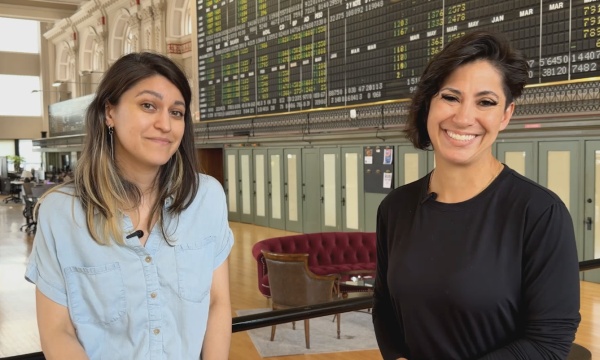
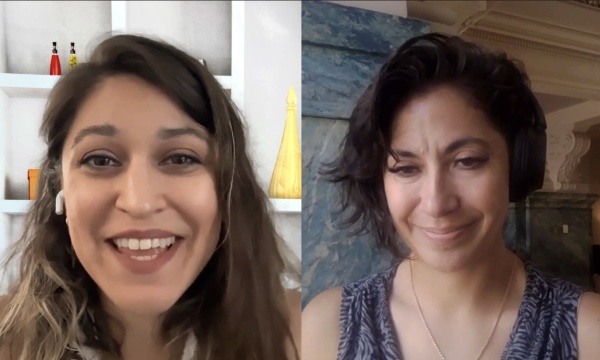
NASA's not a small organization, but when the James Weber telescope came out, it had such an emphasis on like, how do they show the poetry that is in the photography of these new stars and galaxies that they're showing? And the alt text and the descriptions were so robust, it doesn't take that much time to do it. It just takes a little bit of extra or a little bit of, not even extra, just different planning from the start. And I think that showing that thought and care from the beginning can really amplify how folks who are often excluded can be in the conversation to make it better for everybody. This podcast is for city communications teams and video professionals and government. We talk about expanding service delivery with video and streaming media accessibility, gear broadcast, and streaming workflows and more. It's all right here on the Government Video Podcast. Hi everyone and welcome back to the Government Video Podcast where we explore how local governments and community media centers use streaming and video to better serve their residents. I'm Dana Healy, and I am your host for this week. So we've really been focusing on accessibility lately, and I'm really excited for our guest today. I'm thrilled to welcome Mathias Rechtzigel. So Mathias, thank you so much for being here. I am excited to be here too. Yeah. What really drew me to your work was specifically how you frame accessibility. It's not just about compliance checklists. You talk a lot about compassionate design. And that's a really important distinction for governments, especially as they're going to navigate this WCAG compliance as well as ADA Title II. I'd like to share a little bit about your background to the audience, if that's okay with you. Awesome. Thank you so much. So you started with you have background where Genesis works as well as inside US Bank later Federal Reserve. And I noticed that you have a knack for spotting those rocks that people may trip up on in accessibility and less about the big mountains. So why don't we jump right in to explore a little bit about that, can you give us a fuller view of your background with the focus on accessibility for our listeners? So early in my career I worked as a front end developer, really focused on how do we develop, uh, web experiences, and throughout that work I dove deeper into accessibility because if you just design something and you have like pictures of software that often doesn't actually get to the core of the problem and you have to actually code accessible software and I saw so often that in there was this divide between design and development and the like, ethos of caring and compassionate design didn't quite make it to where the code was, especially when folks are like working in agile development and we're trying to build out of velocity. So my background being both design and engineering, I could see and bridge both of those sides and, around 2017, I took a break from an agency that I was working for and worked at an organization called Genesis Works. And Genesis Works was a organization that the last year, last summer before high schoolers, senior year of high school, they went through a training program. And they would learn all the business development skills and business skills, like how to use Excel, how to use Outlook, how to send an email, how to just show up to work. And if they went through the program, they would earn an internship with a local Fortune 500 company. The last couple of weeks if you're going to get your first job, you're gonna earn your first job. You also have to find a bank account that works for you. So you have to do a direct deposit. And what I found like in this class was. A lot of the students couldn't find a bank account that worked for them, whether it was the corporate website where you signed up just wasn't in plain language for somebody in high school or the form wasn't accepting like special characters in people's names or hyphenated last names. And that kind of made me pause and I was like, well, these aren't hard technical issues. But there was this misconnection of where care and technology was and how did it feel for somebody who couldn't sign up for a bank account because of something that their parents gave them, like their first name, their last name, or where they lived. Like we saw issues with fractions of addresses, people that lived at 100 and a half street. And this extended into to accessible software too. Like how would that work for people who were low vision or had no vision or folks who might have like cognitive differences. And I then spent like the next eight or so years of my career really focused on that edge of technology modernization and accessible design. Not just building out the floor of what a, the web content accessibility guidelines says in their checklist, but like, how do we make a delightful experience that works for everybody? Really focusing on those edge cases that actually make better experiences for everybody. So yeah, I think so often I've worked with technology organizations that just do the checklist, and I think we could really go beyond that and really make better experiences for everybody. Yeah I think moving beyond the checklist and for people to just frame out that it's not, and it's like a long journey and how to, I heard the phrase, move accessibility more to the left, like earlier in the projects. Yeah. So I'm really interested in your, 'cause you worked across federal, state, local systems, private, public what differences have you seen in how accessibility is approached, maybe as like a project management high level? Yeah like at the federal level, I saw a lot of section 5 0 8 offices and it really was like, how do we create a production pipeline for like accessible PDFs. But what I saw was all these instances where a PDF or a slide presentation would get passed over to this group and the assumption was that they could make anything accessible and they were often spending so much time really putting a like a square peg into a round hole and just didn't quite work. There was one really impactful presentation where there was a scientist really talking about climate change and he had an impactful opening in imagery of california hills on fire and it was contrasted in the foreground of a retirement home. And this was an organization that was really focused on how do we care for people when they're older and his argument was, well, if we don't think about climate change and we don't think about this impact, like it's going to have an impact on the people that we care about and we should broaden our aperture a little bit more. And the presentation went to the section 5 0 8 office and the alt text of that image was fire. And it didn't convey the impact of the emotion and the contrast between the two things. And anybody who might have use those resources later would miss that key ingredient of what made that presentation special. But from the office's perspective, like they had did their job, they had added alt text and it was descriptive in a way, but it didn't really have the spirit of it. And I've seen smaller, government organizations really do that inverse too, of they really put a lot of thought and care and their team is the accessibility team. It's not just like this other group on the other side. I think. NASA's not a small organization, but when the James Weber telescope came out, it had such an emphasis on like, how do they make how do they show the poetry that is in the photography of these new stars and galaxies that they're showing? And the alt text and the descriptions were so robust, it doesn't take that much time to do it. It just takes a little bit of extra or a little bit of, not even extra, just different planning from the start. And I think that showing that thought and care from the beginning can really amplify how folks who are often excluded can be in the conversation to make it better for everybody. I like that phrasing, thought and care with it, right? And that's really a big piece of it. I've seen images of like call for support numbers and they don't include the support number in the alt text. Just like description of phone. So there's a lot of things that, that folks could. Could consider, could think about as they're starting this whole journey. So I'm curious about your design philosophy. I think we're starting to sense it a little bit, but you've said that every rock can be removed by design and rock is a, like a, where somebody who could trip and not have access to the same amount of information. So what would that look like in practice? Yeah. A couple of years ago, I had the pleasure of working on a really hard project. I worked with the substance abuse and mental health service administration and provided a little bit of accessibility support to the suicide and crisis lifeline. And we were doing usability research on plain language resources for folks with issues related to substance use or mental health or opioid use. And a part of this project was working with folks with disabilities and seeing how their assistor technology would work with various emergency members. And there was an instance where to kind of go back like 9 1 1 has been commonplace for half of a century. And people have heard 9 1 1 on the radio, in school um, on TV and papers and, and everywhere. And like the repetition of hearing 9 1 1 over and over and over and over and over again, over the course of your entire life hopefully leads to a situation where when you need it, you can remember it and recall it so that you can dial it quickly. And 9 88 launched in 2022, hasn't had that repetition kind of baked in and there's this public awareness campaign that needs to happen. And like how do people know that if they have issues with their mental health, they have the ability to call 9 8 8? And in this research we found that assistive technology wasn't interacting with the new crisis number in the same way that it was reacting to 911. And there was an instance in our usability research where the participant said something like, the screener announced like, if you need support, please leverage these 988 resources. And the participant said, well, I only need one. And that was a rock. If the, if that person in a moment of crisis didn't understand that there was one resource that they could use and they could call 9 88, that could be a gap in care and they didn't have the ability to connect. And that barrier, whether it was perceived or because of an accessibility issue could lead to worse outcomes. And, that wasn't a mountain, that was like something that we could fix with a couple of lines of code, a couple of calls to the appropriate assistive technology organizations. But like deep, deep down it was like, how do we talk with smartphone manufacturers? Because 9-1-1 was coded in one way and 9-8-8 was not coded in that way and building that relationship facilitates better outcomes. So like that design philosophy of all of these little rocks people trip on rocks, they don't trip on mountains. So how can we remove all of those little rocks so that folks can continue on their journey to better health or build better happiness? It seems like having multiple perspectives constant different points of views and how people use different platforms interact with websites is a piece of it that we all need I would've never considered that, that story you outlined. So I just think that's a really important distinction for people that are going through this accessibility piece to hear multiple point of views to get people to use platforms in different ways. 'Cause we can read books or resources ourselves all day, but until somebody else that has different lived experiences that go through that same user experience they're gonna see it totally different. So what kind of mis misconceptions do you think people one may have around accessible design? Or is there any myths that, that you think we can squash here in this podcast? I think the thing that I've encountered. Over and over again over the past decade of supporting this space is folks who think that this is like a one time thing. You can do a pass on accessibility and you can test everything, and once you get that stamp of approval, you're good to go and you don't have to think about it anymore. But if you think about it, like you don't just brush your teeth once and call it good. Your dentist would not have a good time with you. And this is one of those things where you really have to create the habit of building accessibility into your process. And it's not just okay, we make sure that our artifacts and our videos are accessible. It's also, like you shared, just putting it in front of folks and say does this work for you? What can we do better? And it doesn't have to be this. Oftentimes working with governments, everyone thinks that they have to do like this huge, like sample, and it has to be representative of the like world that they're responsible for. But there's this great set of research provided by the Nielsen Norman Group that says why do you only have to test with five people? And they share that if you get something in front of five people, you can find most of the usability issues and you can do that over and over again of, and bake it into your processes. Like every quarter we get our resources in front of five to 10 people, we see how it works for them and we fix those issues and really putting that into the process of okay. Quarterly, we're gonna get feedback and we're gonna make it better. So much better than just okay, we're going down the checklist. And over the course of a decade you've created a process and a new design mentality for your organization. And I think even to kind of like show how this isn't like big and scary. I think the city of St. Paul talked with their city council and said we wanna pay people to give us this feedback. And they had their city council approve of a dollar amount to do design research with people in the community. Absolutely fantastic. But that like community co participation just is so important because us as technologists and professionals, we don't know what we don't know, and sometimes there's gonna be those edge cases, and those edge cases are real people's lives. I love hearing that, especially the city of St. Paul paying people to have the user experience, so you're, it's not a volunteer thing. They have had those unique lived experiences and I think it's important for folks to value that. You have a wealth of knowledge, a very specific story, so I wanna tap into that a little more. Do you have any examples of something that's was really thoughtfully designed with accessibility in mind or maybe a project that you've been part of or a case study that you've seen that folks could, consider as they're planning out their different projects. I'd love to hear what's a, a positive example that you've seen? Yeah. A couple years ago I was working on a project for web games, so like it's this really cool, not scary project, and, because of the way that the grant funding and the government funding was coming to us it had to be accessible. So it had to be fun, it had to be accessible, it had to meet all sorts of different needs, whether you were somebody with like low mobility because of all sorts of different reasons being old and having arthritis or you don't have to be old to have arthritis. Like I'm probably gonna have arthritis soon. Or like having tremors or somebody with low vision, somebody who might be deaf and have audio. So there's just all sorts of intricacies of this project, but it also had to be interactive and also had to be fun. So there was this this, example of it where we were building a puzzle game. So for folks who had vision you could show like a picturesque vision of the north Woods in Minnesota and all of the different pieces, how it could go together. But like how do you make that accessible for people who may be blind? And we were thinking about it and the first instance of this was, well, you just number the number, the picture pieces, and you go 1, 2, 3, 4, 5, 6, 7. And like a person can like, but that's not fun. That doesn't share like what the majesty of the boundary waters might be. And we came up with this idea of, well, we could have it be like a poem or an audio description. The person would have to organize the poem in a way that made sense, so it was like you're gamifying, like the alt text of it, which it could be a similar experience for both people, and both people have to go through the same kind of organizing, sorting, and organization like that. But also just shows that like accessibility doesn't have to be scary, and you can make a lot of different things accessible. There was also a instance where we were doing like a memory game. You do kind of A Simon says type order where it's like red, blue green, red, blue, green. But for folks who were using screen readers, again, they could go into their technology and repeat what the sequence was. So we had to actually break an aspect of the web content accessibility guidelines because if we didn't, we'd be forcing these people to cheat at the game. And if you're forcing people to cheat at the game, it's inherently not fun, and you're not actually like doing the spirit of what games can actually do. So again, like having a conversation of like, how do we shift accessibility left and create a more robust experience for people. And what we actually did was we did custom audio cues that also just made the game more fun too. So it wasn't just like JAWS or NVDA, like reading out a sequence. It was like now everybody has this experience of more robust audio that was a little bit more fun. So those are two kind of examples that like aren't scary from the government side.
The folks on the project or the design side, like you have to tap into a different layer of creativity that you know, and think thi at things from so many different angles, which I think could be very energizing. Yeah. Well, and it's like there's the kind of the accessibility guidelines of things have to be perceivable, operable, understandable, and robust. And in game design, one of the interesting aspects of it is that sometimes what makes a game fun is that there's information that is hidden from people. And if you're playing cards like you can't see what the other person's hand is and kind of blending best practices for accessible technology and best practices for games, you can create this really cool Venn diagram of, like rules of thumb are for heuristics and you can take the best of both worlds. And I think that's a really cool like design challenge when you're working with really complicated things. Yeah, I think that's really really great framing. So most of our listeners are with government agencies community media, television, so public entities, and they're undergoing reviewing all of their video content, their websites and things like that to make their content more accessible to WCAG standards. As one is looking at that project, someone could be overwhelmed in kind of the breadth that the guidelines covers. What kind of advice would you give someone who is kinda on that first step of that journey? Yeah. Better today is better than better a year from now. So really taking a bite-sized chunk of whatever your problem is. So if your goal is. Make your website a hundred percent accessible or like as accessible as possible because you can never get to a hundred percent accessible. Really just take it a bite at a time. If you have a well organized content management system and you can fix all of the alt text on stuff I think there's some really great tools that you can do an audit of all of your images, and then you can just fix all of those and fix your archive. He can then go and be like, okay now we have to make all of our PDFs accessible. Like we haven't tagged our PDFs. But like also that is a good opportunity to be like, do we actually need all of these PDFs that are archived on our website? And you can really do a remarkable job of cleaning up. And I've seen so many organizations when they pause and say okay, we're gonna clean up our archive. They get rid of stuff that's outdated, they get rid of stuff that isn't accurate anymore, and that ends up benefiting like their entire constituency. And like with video and like just the multi multiple ways that like video can be presented to people kind of the same thing. Maybe there's just stuff that's not relevant anymore, and you can just archive it. I think in the DOJ rule, if you archive something you could also just fact check me on this because I haven't been onto the on, on this thing. But like the archiving of pieces that are outdated allows folks to not have to worry about making that accessible because it's not relevant to, to many people anymore outside of the historical archive. And. I think that like cleaning up your content in that way it's always something that's on the to-do list, but you never actually have the wherewithal to actually do it. And using these this is like a crisis moment for a lot of these like smaller technology shops where they have to do all of this stuff and like never letting the crisis go to waste. And like really having your plan of like how you're going to like approach this thing and maybe change a little bit of your habits in the process. I love that idea of tying it to, I mean, it's a house cleaning, right? Tying it to another project that you need to do. And related to those archiving rules, I believe it's, the video needs to be in a separate area, a separate archive folder. It needs to have not been touched for a certain period of time, and the information is no longer relevant or active. So folks can look up those specific criteria on that. But that, that's a, it's a great like multi-pronged thing and the alt text piece. I love doing that work because it's very clear, like how much you've gotten done and it feels so satisfying. Yeah. On Fridays, like if I had just like spare time, like it was my my zen like I'm gonna go fix a hundred images of like stuff. And I've worked with organizations that I'm inheriting like 30 years of content and like you have 10,000 pages that you have to go through and you're just like, okay, what's the most recent, or like, what's the, the highest viewed pieces of content? And you just chunk your way down the list. And sometimes it's just oh yeah, this is my meditative activity that I go through to make things better. Right. You put on like your, your favorite tunes, you let it rip. I could totally appreciate that for a Friday activity. With the lens of the government folks that are listening. So a lot of them need to appeal to city managers, elected officials, and they may need to communicate very quickly why, this is why it's important to understand accessible design or what they want them to understand about accessible design. What do you think are some. Like small snippets or soundbites that folks could anchor to, to be able to communicate accessible design effectively to those folks. There's like two categories in camps. It's like the risk-based approach of we have to do this because it's the law and we don't want to have any bad press because of us not fulfilling like obligations. And then there's the other side where you're just providing a better experience to the folks who are often most burdened in your community. And I'll start with the risk side. It's like oftentimes when I'm hired it's because something bad has already happened and then I have to come in and provide emergency triage to the websites or provide emergency triage to like the payment systems or kind of those pieces. And you're not going to eliminate all of those issues. But the framing that I've used with a lot of folks is, well, if you can make accessible software, by default, it is well coded software. And it could be something that's in your contracts when if you're working with people outside of your organization as a vendor well, we're gonna make sure that we're meeting, the web content accessibility guidelines 2.2 AA just to make sure that, or 2.1 AA, just to make sure that the code that we're receiving from our vendor is meeting a quality threshold. And with that quality threshold, we can have somewhat of assurance that people with disabilities can make it through the system so that we don't have any negative consequences for not providing services . That helps people who are more risk focused and risk minded. But on the flip side, you can use that same argument for the benefits of it too. It's well, we're making well coded software that's accessible because the people in our community who have the most barriers are the ones who often use the most services. And if we can make those services easier and lower the administrative burden on people, more people wanna live here. And I think that's something that many communities should strive towards with creating such a delightful community, whether it's physical accessibility or digital accessibility that people say, wow, I'm so cared for in this community. And like they recommend it to their friends too. I think that's kind of a cool, and we've seen it like in different contexts, like you could I don't know what it's like right now in the federal government, but like in past administrations the way in which we were measuring customer experience, there was an accessibility lens. There was how well are we building trust with the community so that they know that we have their best interests at heart and like measuring those in a quantitative way and seeing how, when the little things at the scale of the United States or states on their own or little communities or big cities like really move the needle. And it can often just be like one thing that really triggers somebody to be like, wow, like that experience was so delightful. I'm like, I didn't have any issues with it. And they, that just like locks into their brain and then like they're a lot more forgiving when they see other things that might not. Be up to that standard because they know that you're trying. I love those two different approaches, right? You got that risk mitigation approach versus the, this is ultimately better for our community approach and for folks they'll be able to, use both one or the other, whatever it is. So let's just figure out how to get it done and get more accessible design in this in the world here. So as we're wrapping up here, Mathias, is there a story or some last thoughts that you'd like to leave our listeners and viewers? It's a marathon, not a sprint. And like marathons are scary for so many people and, building more robust government services is on the scale of hundreds of years, and every little thing that we can do today to make it easier for people tomorrow is ultimately a win. And there's gonna be stumbles and not everyone's gonna get it right a hundred percent of the time, but that. Just like showing that you care is like a and care for folks who are often most excluded from conversations. I had a friend who was supporting more accessible COVID tests, and you think of when the COVID test first came out, everybody would get. You would open up the box and it'd be like this huge list of instructions and you would have to like read all the different pieces and there was like so many steps and you had to do everything and you're just like not feeling good anyway, so like you're already kind of in this state where you're not like working at a hundred percent. But. If you really think about a COVID test and the ones that people are most familiar with, there's a lot of things that you need like site and different abilities for, and like one of them is like reading the instructions if there's not a digital version of it. Like people can often be excluded from something that like could protect them. If you don't know how far to like put the swab up your nose, you might collect a sample that's like a little bit not the best sample to get the test to work for. If you don't know exactly where to put the drops of the test material, again, you won't be able to. And then if you can't actually see the result of the COVID test, again, there's all these little teeny tiny steps that like for people of different abilities, it might just not work for them. And I like always like framed like, how would you make, just like the putting the swab up your nose a little bit more accessible and people would come up with all sorts of different options. But what they ended up doing eventually was they put a ring on the COVID swab so that you knew that it just went far enough up your nose and. It works for, for everybody. Like people aren't poking their brain. People know exactly where they could put it up their nose. And then they had another little piece that like the COVID test would like dock, or the dropper would dock into the COVID test so that you knew exactly where the drops were going. And just like a little bit of thought and like design thinking on this really made a COVID test more accessible to, to, to so many more people, but also just made it more accessible to everybody. But like the other side of it was we were rushing so quickly to get COVID tests out the door that if we didn't get them out and we waited a little bit more even more people would've been excluded. So it's like there's this balancing act of when you're in crisis, like how can you rush to support different communities and sometimes sometimes just going back and rethinking what the solution for the problem is, can, like create better outcomes for more people in the future? I love those design changes on the COVID test. They seem so simple and elegant. It doesn't need to be a a huge thing, but it does take brainpower and people to consider and to think about. So I definitely, I appreciate that. So Matthias, thank you so much. This has been such a great conversation. I'm hoping that your stories and your background has helped people think differently around accessible design. I truly appreciate your time with us today. Yeah. Thank you so much. I really appreciate being here too. So folks at home, if you found this episode helpful, please do us a favor and share it with your colleagues and anyone in local government who's going through the accessibility journey right now. Your support helps us spread these ideas and really make sure that we're making a difference and engaging a community about accessibility, government transparency and all the things. So please like, follow, subscribe check out Mathias on LinkedIn, and thanks for listening.